

Contents
Book summary
Winning
by Tim S. Grover
The Core Premise
Tim Grover, the trainer who worked with Michael Jordan, Kobe Bryant, and Dwyne Wade, distills his philosophy on achieving elite performance into a framework he calls "winning mentality." Grover argues that most people fundamentally misunderstand what separates champions from everyone else—it's not talent, luck, or circumstances, but a specific psychological approach to pressure, failure, and competition. His core thesis centers on what he terms the "Relentless" mindset, which he breaks into three categories: Coolers (good), Closers (great), and Cleaners (unstoppable). Cleaners, the highest level, don't just perform under pressure—they create pressure for others while remaining emotionally detached from outcomes. Unlike typical sports psychology that focuses on positive thinking and motivation, Grover embraces what he calls "dark side" thinking—the willingness to be selfish, ruthless, and singularly focused when necessary. He introduces concepts like "pressure privilege" (viewing high-stakes situations as exclusive opportunities) and "trusting your instincts" over analysis paralysis. The book challenges conventional wisdom about teamwork and likability, arguing that true winners often operate alone and make others uncomfortable. Grover's approach differs from other performance books by rejecting feel-good platitudes in favor of uncomfortable truths about what elite achievement actually requires. His framework applies beyond sports to business and life, offering a blueprint for anyone serious about reaching the top of their field rather than simply improving incrementally.
This thread continues the same argument: Tim Grover, the trainer who worked with Michael Jordan, Kobe Bryant, and Dwyne Wade, distills his philosophy on achieving elite performance into a framework he calls "winning mentality." Grover argues…
This thread continues the same argument: Tim Grover, the trainer who worked with Michael Jordan, Kobe Bryant, and Dwyne Wade, distills his philosophy on achieving elite performance into a framework he calls "winning mentality." Grover argues…
This thread continues the same argument: Tim Grover, the trainer who worked with Michael Jordan, Kobe Bryant, and Dwyne Wade, distills his philosophy on achieving elite performance into a framework he calls "winning mentality." Grover argues…
From the international bestselling author of Relentless, Tim S. Grover, comes a new book that offers 13 key principles to ramp up your performance to the maximum.
Winning by Tim S. Grover belongs on the short shelf of books that change how you notice decisions in the wild. Whether you agree with every claim or not, the frame it offers is portable: you can apply it in meetings, investing, hiring, and personal trade-offs without carrying the whole volume.
Many readers return to this book because it names patterns that felt familiar but unnamed. Naming is leverage: once you can point to a mechanism, you can design around it. One through-line is “Relentless Categories: Coolers are reliable performers, Closers step up in crucial moments, but Cleaners are unstoppable forces who create their own pressure and remain emotionally detached from outco” and its implications for judgment under uncertainty.
If you are reading for execution, translate each chapter into a testable habit: one prompt before a big decision, one review question after a project, one constraint you will respect next quarter. Theory becomes useful when it shows up in calendars, not only in margins.
Finally, pair this book with opposing voices. The strongest readers stress-test the thesis against cases where the advice fails, note the boundary conditions, and keep a short list of when not to use this lens. That discipline is how summaries become judgment.
Long-form books reward spaced attention: read a chapter, sleep, then write a half-page memo titled “What would I do differently on Monday?” If you cannot answer with specifics, the idea has not yet landed.
Use Winning as a conversation starter with peers who have different incentives. The disagreements often reveal which parts of the book are robust and which are fragile when power, risk, and time horizons change.
Key Ideas and Arguments
Relentless Categories: Coolers are reliable performers, Closers step up in crucial moments, but Cleaners are unstoppable forces who create their own pressure and remain emotionally detached from outcomes.. This idea shows up repeatedly in Winning: separate the definition from the examples, then ask where the author's evidence is strongest and where anecdotes do most of the work. Consider writing a counterexample: a situation where applying the idea literally would misfire, and what guardrail you would add.
Pressure Privilege: Elite performers view high-pressure situations not as burdens but as exclusive opportunities that separate them from the competition.. This idea shows up repeatedly in Winning: separate the definition from the examples, then ask where the author's evidence is strongest and where anecdotes do most of the work. Consider writing a counterexample: a situation where applying the idea literally would misfire, and what guardrail you would add.
Dark Side Thinking: Embracing selfishness, ruthlessness, and singular focus when necessary, rather than trying to be universally liked or accommodating.. This idea shows up repeatedly in Winning: separate the definition from the examples, then ask where the author's evidence is strongest and where anecdotes do most of the work. Consider writing a counterexample: a situation where applying the idea literally would misfire, and what guardrail you would add.
Instinct Over Analysis: Trusting gut reactions and immediate responses over prolonged analysis, especially in critical moments.. This idea shows up repeatedly in Winning: separate the definition from the examples, then ask where the author's evidence is strongest and where anecdotes do most of the work. Consider writing a counterexample: a situation where applying the idea literally would misfire, and what guardrail you would add.
Zone of Control: Focusing exclusively on what you can control while becoming indifferent to external factors and others' opinions.. This idea shows up repeatedly in Winning: separate the definition from the examples, then ask where the author's evidence is strongest and where anecdotes do most of the work. Consider writing a counterexample: a situation where applying the idea literally would misfire, and what guardrail you would add.
Emotional Detachment: Separating personal feelings from performance requirements to make optimal decisions regardless of comfort level.. This idea shows up repeatedly in Winning: separate the definition from the examples, then ask where the author's evidence is strongest and where anecdotes do most of the work. Consider writing a counterexample: a situation where applying the idea literally would misfire, and what guardrail you would add.
Being Alone: Accepting that true excellence often requires operating independently and making others uncomfortable with your standards.. This idea shows up repeatedly in Winning: separate the definition from the examples, then ask where the author's evidence is strongest and where anecdotes do most of the work. Consider writing a counterexample: a situation where applying the idea literally would misfire, and what guardrail you would add.
Deeper Themes and Context
Winning is not only a catalogue of claims; it is a stance on how to interpret success, failure, and ambiguity. Readers who engage charitably still ask: which recommendations are universal, which are culturally situated, and which require institutional support you do not have?
Comparing the book's prescriptions to your own context is part of the work. A strategy that assumes abundant capital, patient stakeholders, or long feedback loops will read differently if you are resource-constrained, early in a career, or operating under regulatory pressure. Translation beats transcription.
The book also invites you to notice what it does not say. Silences can be instructive: topics the author avoids, counterexamples that never appear, or metrics that are praised without definition. A serious reader keeps a missing-evidence note alongside a to-try note.
Historically, the most influential business and biography titles survive because they double as vocabulary. Teams that share a phrase from Winning move faster only when they also share a definition and a worked example, otherwise they talk past each other with the same words.
How to Apply the Lessons
Connected Mental Models
Who Should Read This
Start here if you want a serious, book-length argument rather than a thread of bullet points. Winning rewards readers who will sketch their own examples, argue back in the margins, and connect chapters to decisions they are facing this quarter.
It is also useful as a shared vocabulary for teams: a common chapter reference can shorten debate if everyone agrees what the term means in practice. If your team only shares the title, not the definition, expect confusion.
Skip or skim if you need a narrow tactical recipe with no theory; this summary preserves the ideas, but the book's value is often in the extended case material and the author's sequencing.
Analyst's Take
Test Yourself
Check your grasp of the book’s moves
A colleague quotes Winning to justify a risky decision. What should you verify first?
You finished Winning and want behaviour change this week.
Further Reading
Continue exploring


Free playbook
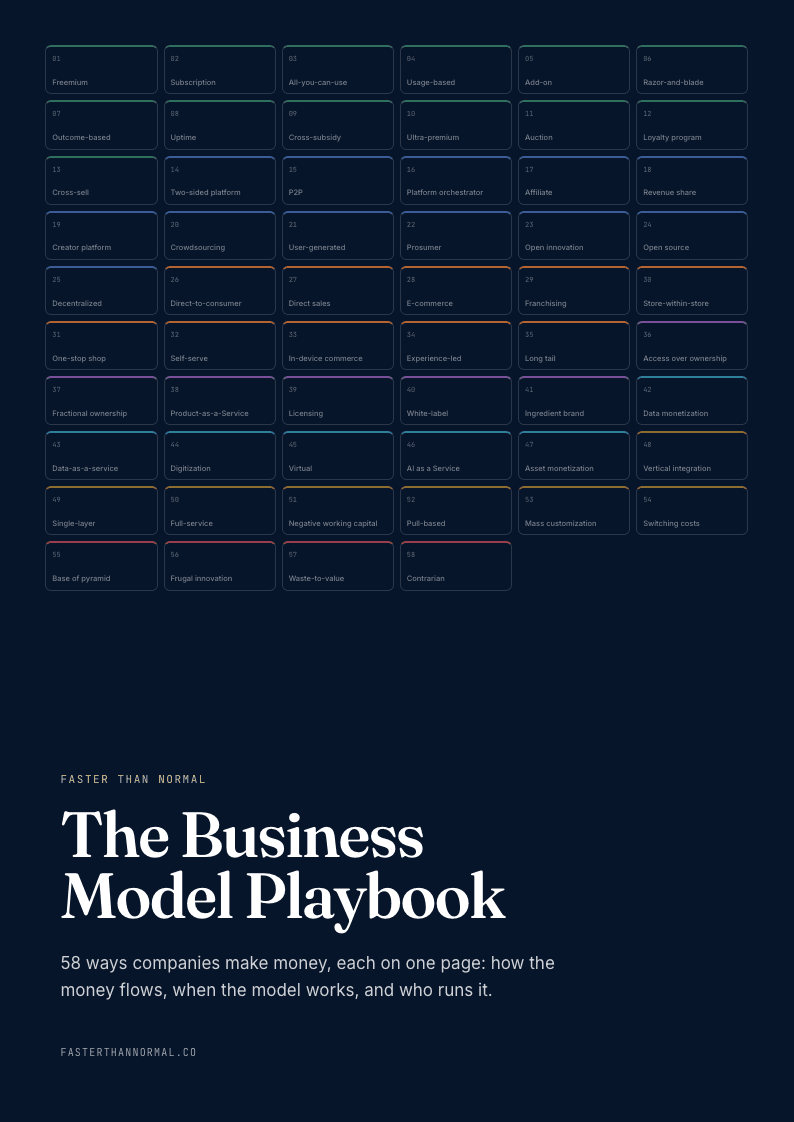
Get The Business Model Playbook
58 business models, one visual page each: how the money flows, the metrics that matter, and who runs it. Free when you join the Faster Than Normal email.
Free. No spam. Unsubscribe anytime.