

Contents
Book summary
When Nothing Else Matters: Michael Jordan's Last Comeback
by Michael Leahy
The Core Premise
Michael Leahy chronicles Michael Jordan's final return to basketball with the Washington Wizards from 2001-2003, revealing the psychological and physical costs of pursuing excellence past its natural expiration date. Rather than celebrating Jordan's legendary status, Leahy presents an unflinching examination of what happens when an all-time great refuses to accept decline. The book exposes Jordan's 'tyranny of perfectionism' — his inability to tolerate teammates who didn't share his obsessive standards — and how this created a toxic environment that undermined team performance. Leahy documents Jordan's 'cognitive dissonance of aging,' where his mental expectations remained at peak levels while his 38-year-old body could no longer deliver. The narrative illustrates the 'sunk cost fallacy of identity' that trapped Jordan: having built his entire sense of self around basketball dominance, retirement felt like psychological death. Through extensive interviews with teammates, coaches, and front office personnel, Leahy reveals how Jordan's presence actually diminished the Wizards' young players rather than elevating them. His 'leadership through intimidation' approach, which worked with seasoned Bulls veterans, proved counterproductive with developing talent. The book serves as a cautionary tale about the difficulty of transitional leadership and the dangers of conflating past success with current capability. For executives and founders, it offers sobering insights into succession planning, knowing when to step back, and the organizational damage that can occur when legendary figures overstay their optimal tenure.
This thread continues the same argument: Michael Leahy chronicles Michael Jordan's final return to basketball with the Washington Wizards from 2001-2003, revealing the psychological and physical costs of pursuing excellence past its natural …
This thread continues the same argument: Michael Leahy chronicles Michael Jordan's final return to basketball with the Washington Wizards from 2001-2003, revealing the psychological and physical costs of pursuing excellence past its natural …
This thread continues the same argument: Michael Leahy chronicles Michael Jordan's final return to basketball with the Washington Wizards from 2001-2003, revealing the psychological and physical costs of pursuing excellence past its natural …
A noted sportswriter offers a portrait of a legendary athlete confronting the twilight of his storied sports career, capturing the many faces of Michael Jordan during his return to basketball at the age of thirty-eight.
When Nothing Else Matters: Michael Jordan's Last Comeback by Michael Leahy belongs on the short shelf of books that change how you notice decisions in the wild. Whether you agree with every claim or not, the frame it offers is portable: you can apply it in meetings, investing, hiring, and personal trade-offs without carrying the whole volume.
Many readers return to this book because it names patterns that felt familiar but unnamed. Naming is leverage: once you can point to a mechanism, you can design around it. One through-line is “Tyranny of perfectionism: Jordan's inability to accept anything less than his impossible standards created a hostile environment that demoralized teammates rather than inspiring them.” and its implications for judgment under uncertainty.
If you are reading for execution, translate each chapter into a testable habit: one prompt before a big decision, one review question after a project, one constraint you will respect next quarter. Theory becomes useful when it shows up in calendars, not only in margins.
Finally, pair this book with opposing voices. The strongest readers stress-test the thesis against cases where the advice fails, note the boundary conditions, and keep a short list of when not to use this lens. That discipline is how summaries become judgment.
Long-form books reward spaced attention: read a chapter, sleep, then write a half-page memo titled “What would I do differently on Monday?” If you cannot answer with specifics, the idea has not yet landed.
Use When Nothing Else Matters: Michael Jordan's Last Comeback as a conversation starter with peers who have different incentives. The disagreements often reveal which parts of the book are robust and which are fragile when power, risk, and time horizons change.
Key Ideas and Arguments
Tyranny of perfectionism: Jordan's inability to accept anything less than his impossible standards created a hostile environment that demoralized teammates rather than inspiring them.. This idea shows up repeatedly in When Nothing Else Matters: Michael Jordan's Last Comeback: separate the definition from the examples, then ask where the author's evidence is strongest and where anecdotes do most of the work. Consider writing a counterexample: a situation where applying the idea literally would misfire, and what guardrail you would add.
Cognitive dissonance of aging: The mental gap between expecting peak performance and delivering diminished results, leading to frustration and poor decision-making.. This idea shows up repeatedly in When Nothing Else Matters: Michael Jordan's Last Comeback: separate the definition from the examples, then ask where the author's evidence is strongest and where anecdotes do most of the work. Consider writing a counterexample: a situation where applying the idea literally would misfire, and what guardrail you would add.
Sunk cost fallacy of identity: When personal identity becomes so intertwined with a role that stepping away feels impossible, even when continued participation is counterproductive.. This idea shows up repeatedly in When Nothing Else Matters: Michael Jordan's Last Comeback: separate the definition from the examples, then ask where the author's evidence is strongest and where anecdotes do most of the work. Consider writing a counterexample: a situation where applying the idea literally would misfire, and what guardrail you would add.
Leadership through intimidation: Jordan's confrontational management style that worked with veteran players but proved toxic with younger, developing talent.. This idea shows up repeatedly in When Nothing Else Matters: Michael Jordan's Last Comeback: separate the definition from the examples, then ask where the author's evidence is strongest and where anecdotes do most of the work. Consider writing a counterexample: a situation where applying the idea literally would misfire, and what guardrail you would add.
Transitional leadership failure: The organizational dysfunction that occurs when legendary figures refuse to acknowledge their declining effectiveness and adapt their approach.. This idea shows up repeatedly in When Nothing Else Matters: Michael Jordan's Last Comeback: separate the definition from the examples, then ask where the author's evidence is strongest and where anecdotes do most of the work. Consider writing a counterexample: a situation where applying the idea literally would misfire, and what guardrail you would add.
Performance nostalgia trap: The tendency to make decisions based on past capabilities rather than current reality, leading to strategic miscalculations.. This idea shows up repeatedly in When Nothing Else Matters: Michael Jordan's Last Comeback: separate the definition from the examples, then ask where the author's evidence is strongest and where anecdotes do most of the work. Consider writing a counterexample: a situation where applying the idea literally would misfire, and what guardrail you would add.
Deeper Themes and Context
When Nothing Else Matters: Michael Jordan's Last Comeback is not only a catalogue of claims; it is a stance on how to interpret success, failure, and ambiguity. Readers who engage charitably still ask: which recommendations are universal, which are culturally situated, and which require institutional support you do not have?
Comparing the book's prescriptions to your own context is part of the work. A strategy that assumes abundant capital, patient stakeholders, or long feedback loops will read differently if you are resource-constrained, early in a career, or operating under regulatory pressure. Translation beats transcription.
The book also invites you to notice what it does not say. Silences can be instructive: topics the author avoids, counterexamples that never appear, or metrics that are praised without definition. A serious reader keeps a missing-evidence note alongside a to-try note.
Historically, the most influential business and biography titles survive because they double as vocabulary. Teams that share a phrase from When Nothing Else Matters: Michael Jordan's Last Comeback move faster only when they also share a definition and a worked example, otherwise they talk past each other with the same words.
How to Apply the Lessons
Connected Mental Models
Who Should Read This
Start here if you want a serious, book-length argument rather than a thread of bullet points. When Nothing Else Matters: Michael Jordan's Last Comeback rewards readers who will sketch their own examples, argue back in the margins, and connect chapters to decisions they are facing this quarter.
It is also useful as a shared vocabulary for teams: a common chapter reference can shorten debate if everyone agrees what the term means in practice. If your team only shares the title, not the definition, expect confusion.
Skip or skim if you need a narrow tactical recipe with no theory; this summary preserves the ideas, but the book's value is often in the extended case material and the author's sequencing.
Analyst's Take
Test Yourself
Check your grasp of the book’s moves
A colleague quotes When Nothing Else Matters: Michael Jordan's Last Comeback to justify a risky decision. What should you verify first?
You finished When Nothing Else Matters: Michael Jordan's Last Comeback and want behaviour change this week.
Further Reading
Continue exploring


Free playbook
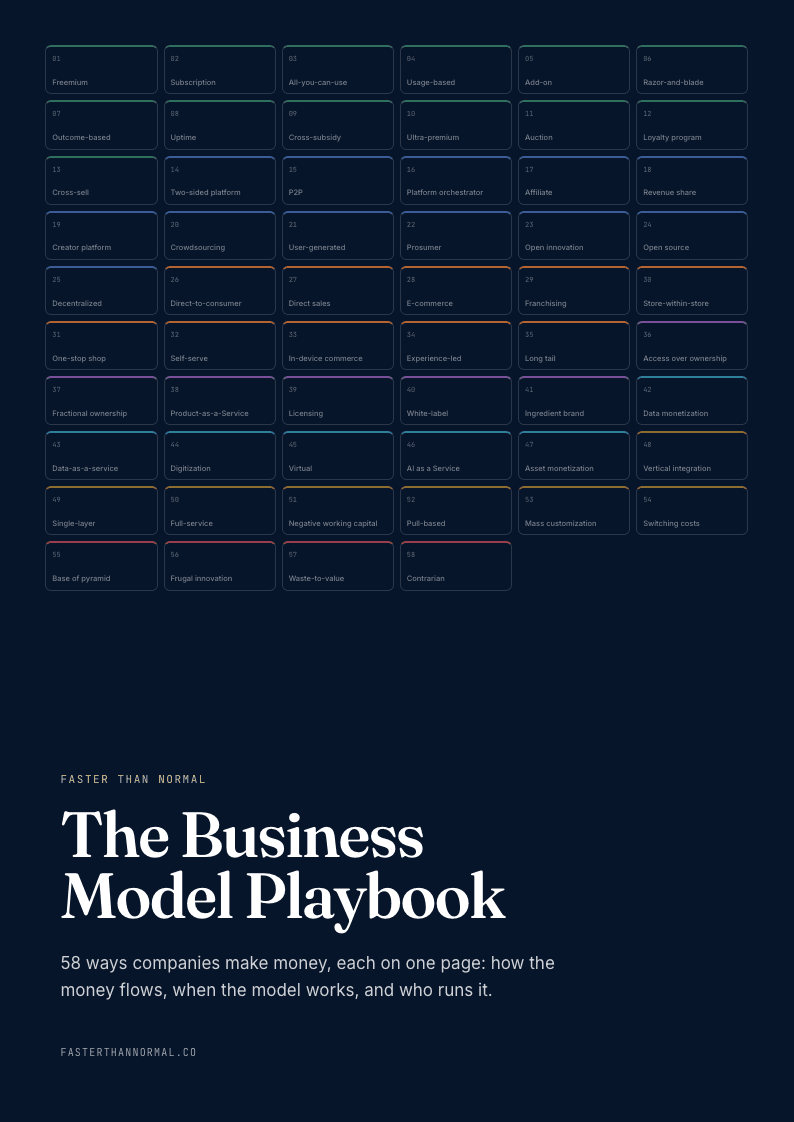
Get The Business Model Playbook
58 business models, one visual page each: how the money flows, the metrics that matter, and who runs it. Free when you join the Faster Than Normal email.
Free. No spam. Unsubscribe anytime.