
Contents
Book summary
The Wit and Wisdom of Lee Kuan Yew
by Lee Kuan Yew
The Core Premise
Lee Kuan Yew transformed Singapore from a struggling port city into a prosperous nation through pragmatic governance that prioritized results over ideology. His approach centered on what he called "realistic idealism" — accepting human nature and cultural differences while pursuing measurable outcomes. Rather than importing Western democratic models wholesale, Lee developed a system of "guided democracy" that emphasized meritocracy, long-term planning, and social cohesion. His philosophy rejected both unfettered capitalism and socialist egalitarianism, instead pursuing what he termed "fair inequality" — ensuring basic needs were met while rewarding merit and effort. Lee's framework for nation-building rested on three pillars: economic development through foreign investment and education, social stability through controlled immigration and housing policies, and political legitimacy through delivering concrete improvements to citizens' lives. He believed cultural values shaped economic outcomes, arguing that Confucian emphasis on education, family, and collective responsibility gave East Asian societies competitive advantages. His "First World Oasis" strategy deliberately created an environment that attracted global talent and capital while maintaining local control. The book reveals how Lee navigated complex geopolitical relationships, particularly with Malaysia, China, and the United States, by positioning Singapore as indispensable rather than threatening. His insights on leadership emphasize the importance of facing unpleasant truths, making decisions based on evidence rather than wishful thinking, and maintaining credibility through consistent delivery of promises.
This thread continues the same argument: Lee Kuan Yew transformed Singapore from a struggling port city into a prosperous nation through pragmatic governance that prioritized results over ideology. His approach centered on what he called "re…
This thread continues the same argument: Lee Kuan Yew transformed Singapore from a struggling port city into a prosperous nation through pragmatic governance that prioritized results over ideology. His approach centered on what he called "re…
This thread continues the same argument: Lee Kuan Yew transformed Singapore from a struggling port city into a prosperous nation through pragmatic governance that prioritized results over ideology. His approach centered on what he called "re…
Lee Kuan Yew played the pivotal role in Singapore’s transition from British Crown Colony to independent developing nation, and on to the economically powerful and diplomatically influential city-state it is today. Throughout this surprising and at times painful journey, he has proved a charismatic and occasionally controversial leader. Lee is a conviction politician whose speeches are unambiguous, characterful and eminently quotable; this collection of almost 600 short quotations provides a compelling summary of his views on a wide range of topics from Singapore’s past, present and future. In Lee's own words: "I have been accused of many things in my lfe, but not even my worst enemy has ever accused me of being afraid to speak my mind." ,
The Wit and Wisdom of Lee Kuan Yew by Lee Kuan Yew belongs on the short shelf of books that change how you notice decisions in the wild. Whether you agree with every claim or not, the frame it offers is portable: you can apply it in meetings, investing, hiring, and personal trade-offs without carrying the whole volume.
Many readers return to this book because it names patterns that felt familiar but unnamed. Naming is leverage: once you can point to a mechanism, you can design around it. One through-line is “Realistic Idealism: Accept human nature and work within existing constraints rather than pursuing utopian visions that ignore practical realities.” and its implications for judgment under uncertainty.
If you are reading for execution, translate each chapter into a testable habit: one prompt before a big decision, one review question after a project, one constraint you will respect next quarter. Theory becomes useful when it shows up in calendars, not only in margins.
Finally, pair this book with opposing voices. The strongest readers stress-test the thesis against cases where the advice fails, note the boundary conditions, and keep a short list of when not to use this lens. That discipline is how summaries become judgment.
Long-form books reward spaced attention: read a chapter, sleep, then write a half-page memo titled “What would I do differently on Monday?” If you cannot answer with specifics, the idea has not yet landed.
Use The Wit and Wisdom of Lee Kuan Yew as a conversation starter with peers who have different incentives. The disagreements often reveal which parts of the book are robust and which are fragile when power, risk, and time horizons change.
Key Ideas and Arguments
Realistic Idealism: Accept human nature and work within existing constraints rather than pursuing utopian visions that ignore practical realities.. This idea shows up repeatedly in The Wit and Wisdom of Lee Kuan Yew: separate the definition from the examples, then ask where the author's evidence is strongest and where anecdotes do most of the work. Consider writing a counterexample: a situation where applying the idea literally would misfire, and what guardrail you would add.
Guided Democracy: A political system that maintains democratic legitimacy while ensuring decisions are made by qualified leaders rather than populist appeal.. This idea shows up repeatedly in The Wit and Wisdom of Lee Kuan Yew: separate the definition from the examples, then ask where the author's evidence is strongest and where anecdotes do most of the work. Consider writing a counterexample: a situation where applying the idea literally would misfire, and what guardrail you would add.
Fair Inequality: Society should provide equal opportunities and meet basic needs while allowing merit-based differences in outcomes.. This idea shows up repeatedly in The Wit and Wisdom of Lee Kuan Yew: separate the definition from the examples, then ask where the author's evidence is strongest and where anecdotes do most of the work. Consider writing a counterexample: a situation where applying the idea literally would misfire, and what guardrail you would add.
First World Oasis Strategy: Create a pocket of excellence that attracts global talent and investment by maintaining higher standards than the surrounding region.. This idea shows up repeatedly in The Wit and Wisdom of Lee Kuan Yew: separate the definition from the examples, then ask where the author's evidence is strongest and where anecdotes do most of the work. Consider writing a counterexample: a situation where applying the idea literally would misfire, and what guardrail you would add.
Cultural Determinism: Values and cultural practices significantly influence economic and political outcomes, requiring different approaches for different societies.. This idea shows up repeatedly in The Wit and Wisdom of Lee Kuan Yew: separate the definition from the examples, then ask where the author's evidence is strongest and where anecdotes do most of the work. Consider writing a counterexample: a situation where applying the idea literally would misfire, and what guardrail you would add.
Pragmatic Meritocracy: Select leaders and policies based on demonstrated competence and results rather than ideology or popularity.. This idea shows up repeatedly in The Wit and Wisdom of Lee Kuan Yew: separate the definition from the examples, then ask where the author's evidence is strongest and where anecdotes do most of the work. Consider writing a counterexample: a situation where applying the idea literally would misfire, and what guardrail you would add.
Strategic Vulnerability: Small nations must make themselves indispensable to larger powers rather than trying to compete directly with them.. This idea shows up repeatedly in The Wit and Wisdom of Lee Kuan Yew: separate the definition from the examples, then ask where the author's evidence is strongest and where anecdotes do most of the work. Consider writing a counterexample: a situation where applying the idea literally would misfire, and what guardrail you would add.
Deeper Themes and Context
The Wit and Wisdom of Lee Kuan Yew is not only a catalogue of claims; it is a stance on how to interpret success, failure, and ambiguity. Readers who engage charitably still ask: which recommendations are universal, which are culturally situated, and which require institutional support you do not have?
Comparing the book's prescriptions to your own context is part of the work. A strategy that assumes abundant capital, patient stakeholders, or long feedback loops will read differently if you are resource-constrained, early in a career, or operating under regulatory pressure. Translation beats transcription.
The book also invites you to notice what it does not say. Silences can be instructive: topics the author avoids, counterexamples that never appear, or metrics that are praised without definition. A serious reader keeps a missing-evidence note alongside a to-try note.
Historically, the most influential business and biography titles survive because they double as vocabulary. Teams that share a phrase from The Wit and Wisdom of Lee Kuan Yew move faster only when they also share a definition and a worked example, otherwise they talk past each other with the same words.
How to Apply the Lessons
Connected Mental Models
Who Should Read This
Start here if you want a serious, book-length argument rather than a thread of bullet points. The Wit and Wisdom of Lee Kuan Yew rewards readers who will sketch their own examples, argue back in the margins, and connect chapters to decisions they are facing this quarter.
It is also useful as a shared vocabulary for teams: a common chapter reference can shorten debate if everyone agrees what the term means in practice. If your team only shares the title, not the definition, expect confusion.
Skip or skim if you need a narrow tactical recipe with no theory; this summary preserves the ideas, but the book's value is often in the extended case material and the author's sequencing.
Analyst's Take
Test Yourself
Check your grasp of the book’s moves
A colleague quotes The Wit and Wisdom of Lee Kuan Yew to justify a risky decision. What should you verify first?
You finished The Wit and Wisdom of Lee Kuan Yew and want behaviour change this week.
Further Reading
Why this matters next
Continue exploring


Free playbook
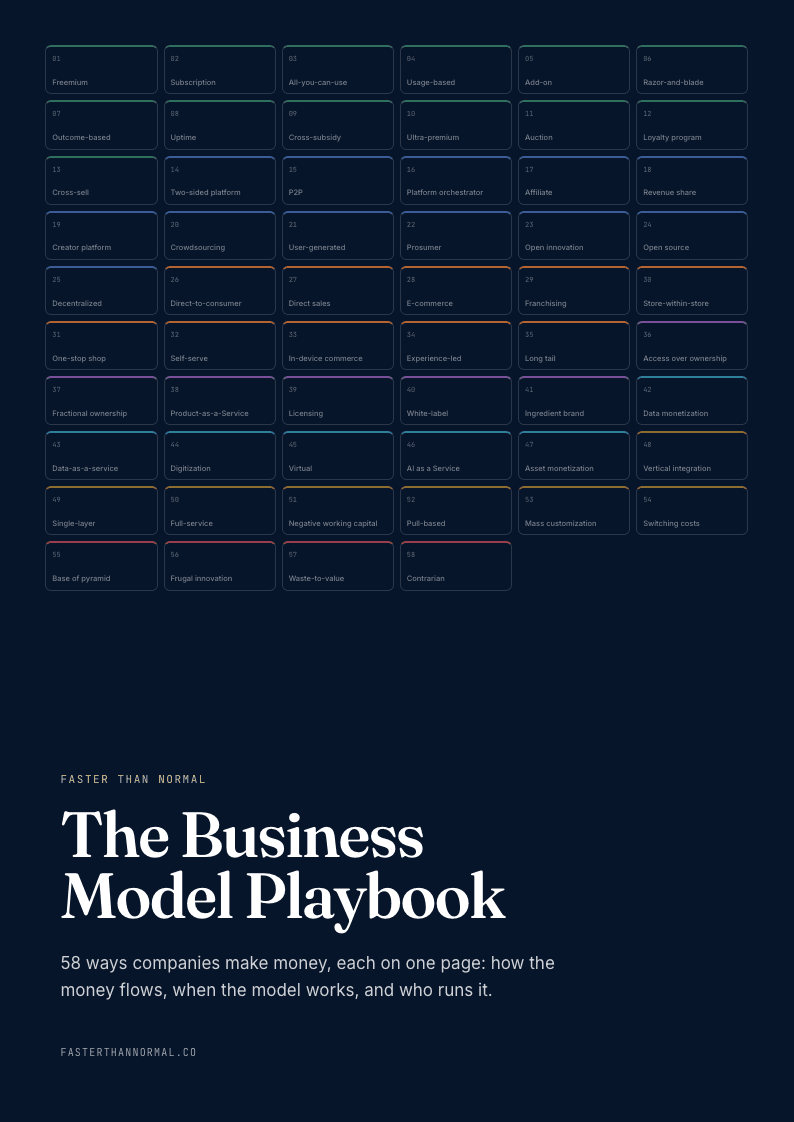
Get The Business Model Playbook
58 business models, one visual page each: how the money flows, the metrics that matter, and who runs it. Free when you join the Faster Than Normal email.
Free. No spam. Unsubscribe anytime.