
Contents
Book summary
The Singapore Story: Memoirs of Lee Kuan Yew, Vol. 1
by Lee Kuan Yew
The Core Premise
A Cambridge-educated lawyer inherited a tropical backwater with no natural resources, hostile neighbors, and a restless population of 1.9 million people spread across multiple ethnic groups. Within three decades, Lee Kuan Yew transformed Singapore from a Third World port city into a First World economic powerhouse, proving that visionary leadership and pragmatic governance could overcome seemingly insurmountable geographical and political constraints. His memoir reveals the brutal calculus behind building a nation: every policy decision measured not by ideology but by survival.
Lee's doctrine of "pragmatic realism" governed Singapore's approach to everything from economic development to social engineering. When multinational corporations hesitated to invest in Southeast Asia during the 1960s, Lee created what he called the "oasis strategy" — positioning Singapore as a stable, corruption-free island of competence surrounded by political chaos. He understood that small nations cannot afford the luxury of inefficiency. Singapore's civil service became a meritocracy where ministers' salaries matched private sector compensation, eliminating the financial incentive for corruption. Lee fired his own brother-in-law from a government position for minor infractions, establishing that family connections meant nothing when institutional integrity was at stake.
The book chronicles Lee's masterful use of "coercive consultation" — a governing style that combined authoritarian decision-making with extensive stakeholder engagement. Before implementing the controversial policy of making English the primary language of instruction, Lee spent months meeting with Chinese, Malay, and Tamil community leaders, absorbing their objections while never wavering from his ultimate goal. He recognized that ethnic harmony required conscious social architecture, not wishful thinking about natural integration. Singapore's housing policy deliberately mixed ethnic groups in every neighborhood, preventing the formation of racial enclaves that had torn apart other post-colonial societies.
Lee's economic philosophy centered on what he termed "competitive positioning" — identifying Singapore's unique advantages and ruthlessly exploiting them while competitors remained distracted by domestic politics. When other developing nations pursued import substitution strategies, Singapore embraced export-oriented industrialization, betting correctly that global trade would expand faster than domestic consumption. Lee personally courted foreign investors, understanding that capital follows leadership credibility more than tax incentives. His famous confrontation with union leaders in the 1960s — where he threatened to resign rather than compromise on productivity reforms — demonstrated how leaders must sometimes risk everything to establish long-term credibility.
For modern executives, Lee's memoir provides a masterclass in strategic thinking under extreme constraints. His framework of "principled adaptability" shows how leaders can maintain core values while adjusting tactics to changing circumstances. Singapore's survival depended on Lee's ability to navigate between competing superpowers during the Cold War, extracting benefits from both American and Soviet relationships without becoming dependent on either. The lesson transcends geopolitics: successful organizations maintain strategic flexibility while holding firm to fundamental principles about quality, integrity, and long-term value creation.
The Singapore Story is the first volume of the memoirs of Lee Kuan Yew, the man who planted the island state of Singapore firmly on the map of the world. It was first published in 1999. In intimate detail, Lee recounts the battles against colonialists, communists and communalists that led to Singapore’s independence. With consummate political skill, he countered adversaries, sometimes enlisting their help, at others opposing them, in the single-minded pursuit of Singapore’s interests. We read how he led striking unionists against the colonial government, how over tea and golf he fostered ties with key players in Britain and Malaya, of secret midnight meetings in badly lit rooms, drinking warm Anchor beer with a communist underground leader, of his purposeful forging of an alliance with communists to gain the support of the Chinese-educated masses. Readers will find inspiration in his tenacity as he fought for the people’s hearts and minds against first the communists and later the communalists – in parliament, on the streets and through the media. Drawing on unpublished Cabinet papers, archives in Singapore, Britain, Australia, New Zealand and the United States, as well as personal…
The Singapore Story: Memoirs of Lee Kuan Yew, Vol. 1 by Lee Kuan Yew belongs on the short shelf of books that change how you notice decisions in the wild. Whether you agree with every claim or not, the frame it offers is portable: you can apply it in meetings, investing, hiring, and personal trade-offs without carrying the whole volume.
Many readers return to this book because it names patterns that felt familiar but unnamed. Naming is leverage: once you can point to a mechanism, you can design around it. One through-line is “Pragmatic Realism: Lee's governing philosophy that prioritized practical outcomes over ideological purity. Every policy decision was evaluated based on its contribution to Singapore's survival and pro” and its implications for judgment under uncertainty.
If you are reading for execution, translate each chapter into a testable habit: one prompt before a big decision, one review question after a project, one constraint you will respect next quarter. Theory becomes useful when it shows up in calendars, not only in margins.
Finally, pair this book with opposing voices. The strongest readers stress-test the thesis against cases where the advice fails, note the boundary conditions, and keep a short list of when not to use this lens. That discipline is how summaries become judgment.
Long-form books reward spaced attention: read a chapter, sleep, then write a half-page memo titled “What would I do differently on Monday?” If you cannot answer with specifics, the idea has not yet landed.
Use The Singapore Story: Memoirs of Lee Kuan Yew, Vol. 1 as a conversation starter with peers who have different incentives. The disagreements often reveal which parts of the book are robust and which are fragile when power, risk, and time horizons change.
Key Ideas and Arguments
Pragmatic Realism: Lee's governing philosophy that prioritized practical outcomes over ideological purity. Every policy decision was evaluated based on its contribution to Singapore's survival and prosperity, regardless of whether it aligned with Western democratic norms or traditional Asian values.. This idea shows up repeatedly in The Singapore Story: Memoirs of Lee Kuan Yew, Vol. 1: separate the definition from the examples, then ask where the author's evidence is strongest and where anecdotes do most of the work. Consider writing a counterexample: a situation where applying the idea literally would misfire, and what guardrail you would add.
Oasis Strategy: Positioning Singapore as a stable, corruption-free zone of competence in a volatile region. Lee deliberately created institutional advantages that made Singapore indispensable to international businesses seeking a reliable Southeast Asian base.. This idea shows up repeatedly in The Singapore Story: Memoirs of Lee Kuan Yew, Vol. 1: separate the definition from the examples, then ask where the author's evidence is strongest and where anecdotes do most of the work. Consider writing a counterexample: a situation where applying the idea literally would misfire, and what guardrail you would add.
Coercive Consultation: A leadership approach combining authoritarian decision-making with extensive stakeholder engagement. Lee would consult widely to understand concerns and build support, but retained final authority to implement difficult decisions over popular objections.. This idea shows up repeatedly in The Singapore Story: Memoirs of Lee Kuan Yew, Vol. 1: separate the definition from the examples, then ask where the author's evidence is strongest and where anecdotes do most of the work. Consider writing a counterexample: a situation where applying the idea literally would misfire, and what guardrail you would add.
Competitive Positioning: Singapore's economic strategy of identifying unique advantages and exploiting them while competitors remained distracted. Rather than trying to compete across all sectors, Singapore focused on becoming world-class in logistics, finance, and manufacturing.. This idea shows up repeatedly in The Singapore Story: Memoirs of Lee Kuan Yew, Vol. 1: separate the definition from the examples, then ask where the author's evidence is strongest and where anecdotes do most of the work. Consider writing a counterexample: a situation where applying the idea literally would misfire, and what guardrail you would add.
Principled Adaptability: The ability to maintain core values while adjusting tactics to changing circumstances. Lee demonstrated this during Cold War navigation, maintaining Singapore's independence while building beneficial relationships with competing superpowers.. This idea shows up repeatedly in The Singapore Story: Memoirs of Lee Kuan Yew, Vol. 1: separate the definition from the examples, then ask where the author's evidence is strongest and where anecdotes do most of the work. Consider writing a counterexample: a situation where applying the idea literally would misfire, and what guardrail you would add.
Social Engineering: Deliberate policies designed to create ethnic harmony and national identity. Singapore's housing policy mixed ethnic groups in every neighborhood, while education policy made English the common language to prevent any single ethnic group from dominating.. This idea shows up repeatedly in The Singapore Story: Memoirs of Lee Kuan Yew, Vol. 1: separate the definition from the examples, then ask where the author's evidence is strongest and where anecdotes do most of the work. Consider writing a counterexample: a situation where applying the idea literally would misfire, and what guardrail you would add.
Meritocratic Governance: Building institutions where performance determined advancement and compensation matched private sector standards. Lee eliminated financial incentives for corruption by paying government officials competitive salaries tied to results.. This idea shows up repeatedly in The Singapore Story: Memoirs of Lee Kuan Yew, Vol. 1: separate the definition from the examples, then ask where the author's evidence is strongest and where anecdotes do most of the work. Consider writing a counterexample: a situation where applying the idea literally would misfire, and what guardrail you would add.
Strategic Patience: Lee's willingness to implement unpopular policies with long-term benefits rather than seeking short-term popularity. His focus on education and infrastructure investments required decades to pay off but created Singapore's competitive advantages.. This idea shows up repeatedly in The Singapore Story: Memoirs of Lee Kuan Yew, Vol. 1: separate the definition from the examples, then ask where the author's evidence is strongest and where anecdotes do most of the work. Consider writing a counterexample: a situation where applying the idea literally would misfire, and what guardrail you would add.
Deeper Themes and Context
The Singapore Story: Memoirs of Lee Kuan Yew, Vol. 1 is not only a catalogue of claims; it is a stance on how to interpret success, failure, and ambiguity. Readers who engage charitably still ask: which recommendations are universal, which are culturally situated, and which require institutional support you do not have?
Comparing the book's prescriptions to your own context is part of the work. A strategy that assumes abundant capital, patient stakeholders, or long feedback loops will read differently if you are resource-constrained, early in a career, or operating under regulatory pressure. Translation beats transcription.
The book also invites you to notice what it does not say. Silences can be instructive: topics the author avoids, counterexamples that never appear, or metrics that are praised without definition. A serious reader keeps a missing-evidence note alongside a to-try note.
Historically, the most influential business and biography titles survive because they double as vocabulary. Teams that share a phrase from The Singapore Story: Memoirs of Lee Kuan Yew, Vol. 1 move faster only when they also share a definition and a worked example, otherwise they talk past each other with the same words.
How to Apply the Lessons
Connected Mental Models
Who Should Read This
Start here if you want a serious, book-length argument rather than a thread of bullet points. The Singapore Story: Memoirs of Lee Kuan Yew, Vol. 1 rewards readers who will sketch their own examples, argue back in the margins, and connect chapters to decisions they are facing this quarter.
It is also useful as a shared vocabulary for teams: a common chapter reference can shorten debate if everyone agrees what the term means in practice. If your team only shares the title, not the definition, expect confusion.
Skip or skim if you need a narrow tactical recipe with no theory; this summary preserves the ideas, but the book's value is often in the extended case material and the author's sequencing.
Analyst's Take
Test Yourself
Check your grasp of the book’s moves
A colleague quotes The Singapore Story: Memoirs of Lee Kuan Yew, Vol. 1 to justify a risky decision. What should you verify first?
You finished The Singapore Story: Memoirs of Lee Kuan Yew, Vol. 1 and want behaviour change this week.
Further Reading
Continue exploring


Free playbook
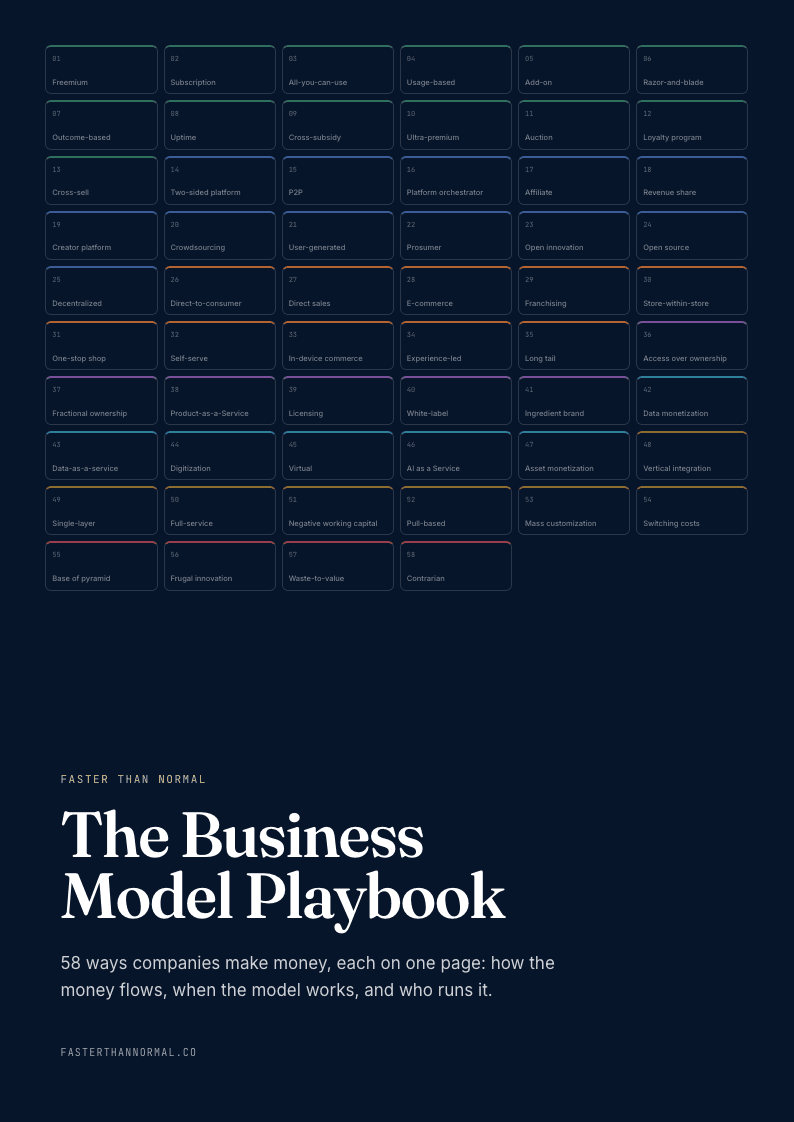
Get The Business Model Playbook
58 business models, one visual page each: how the money flows, the metrics that matter, and who runs it. Free when you join the Faster Than Normal email.
Free. No spam. Unsubscribe anytime.