

Contents
Book summary
The King of Madison Avenue: David Ogilvy and the Making of Modern Advertising
by Kenneth Roman
The Core Premise
David Ogilvy built advertising's most profitable agency by doing the opposite of what every creative director believed. While Madison Avenue celebrated clever wordplay and artistic campaigns, Ogilvy obsessed over direct response principles, testing every headline and measuring every dollar spent. His Hathaway shirt campaign with the eye-patched model ran for 25 years not because it won awards, but because it sold shirts.
Ogilvy's "Brand Image" theory revolutionized how companies think about long-term value creation. Rather than focusing solely on product features, he argued that successful brands must cultivate a distinct personality that becomes more valuable than the product itself. His Rolls-Royce advertisement—"At 60 miles an hour the loudest noise in this new Rolls-Royce comes from the electric clock"—exemplified this approach by positioning the car as the pinnacle of engineering excellence rather than just expensive transportation. The headline, derived from a technical review, combined factual credibility with aspirational imagery.
The book reveals Ogilvy's systematic approach to creative work through his "Magic Lanterns" methodology. He rejected the romantic notion of inspiration, instead building repeatable processes for generating ideas. Every campaign began with exhaustive research into the target customer's psychology, competitive landscape, and product differentiation. His team at Ogilvy & Mather developed detailed creative briefs that served as strategic blueprints, ensuring that brilliant execution served business objectives rather than creative egos.
Ogilvy's emphasis on international expansion anticipated globalization by decades. While competitors focused on domestic markets, he established offices across Europe and Asia, developing what he called "advertising diplomacy"—the art of creating campaigns that resonated across cultural boundaries while maintaining brand consistency. His work for Shell demonstrated this principle, using universal human experiences like travel and adventure to build global brand recognition.
For executives building brands today, Ogilvy's legacy extends beyond advertising tactics to fundamental questions about customer psychology and competitive positioning. His insistence on measuring everything, respecting the intelligence of consumers, and building long-term brand equity over short-term sales spikes provides a framework for sustainable growth in any industry. The principles that made Ogilvy the king of Madison Avenue—rigorous research, creative discipline, and relentless focus on results—remain the foundation of effective marketing.
From the former CEO of Ogilvy & Mather, the first biography of advertising maverick David Ogilvy Famous for his colorful personality and formidable intellect, David Ogilvy left an indelible mark on the advertising world, transforming it into a dynamic industry full of passionate, creative individuals. This first-ever biography traces Ogilvy's remarkable life, from his short-lived college education and undercover work during World War II to his many successful years in New York advertising. Ogilvy's fascinating life and career make for an intriguing study from both a biographical and a business standpoint. The King of Madison Avenue is based on a wealth of material from decades of working alongside the advertising giant, including a large collection of photos, memos, recordings, notes, and extensive archives of Ogilvy's personal papers. The book describes the creation of some of history's most famous advertising campaigns, such as: * "The man in the Hathaway shirt" with his aristocratic eye patch * "The man from Schweppes is here" with Commander Whitehead, the elegant bearded Brit, introducing tonic water (and "Schweppervesence") to the U.S. * Perhaps the most famous automobile head…
The King of Madison Avenue: David Ogilvy and the Making of Modern Advertising by Kenneth Roman belongs on the short shelf of books that change how you notice decisions in the wild. Whether you agree with every claim or not, the frame it offers is portable: you can apply it in meetings, investing, hiring, and personal trade-offs without carrying the whole volume.
Many readers return to this book because it names patterns that felt familiar but unnamed. Naming is leverage: once you can point to a mechanism, you can design around it. One through-line is “Brand Image Theory: Ogilvy argued that brands must develop distinct personalities that become more valuable than the underlying products. This emotional connection drives premium pricing and customer ” and its implications for judgment under uncertainty.
If you are reading for execution, translate each chapter into a testable habit: one prompt before a big decision, one review question after a project, one constraint you will respect next quarter. Theory becomes useful when it shows up in calendars, not only in margins.
Finally, pair this book with opposing voices. The strongest readers stress-test the thesis against cases where the advice fails, note the boundary conditions, and keep a short list of when not to use this lens. That discipline is how summaries become judgment.
Long-form books reward spaced attention: read a chapter, sleep, then write a half-page memo titled “What would I do differently on Monday?” If you cannot answer with specifics, the idea has not yet landed.
Use The King of Madison Avenue: David Ogilvy and the Making of Modern Advertising as a conversation starter with peers who have different incentives. The disagreements often reveal which parts of the book are robust and which are fragile when power, risk, and time horizons change.
Key Ideas and Arguments
Brand Image Theory: Ogilvy argued that brands must develop distinct personalities that become more valuable than the underlying products. This emotional connection drives premium pricing and customer loyalty, as demonstrated by his work transforming Hathaway shirts from commodity clothing into a sophisticated lifestyle brand.. This idea shows up repeatedly in The King of Madison Avenue: David Ogilvy and the Making of Modern Advertising: separate the definition from the examples, then ask where the author's evidence is strongest and where anecdotes do most of the work. Consider writing a counterexample: a situation where applying the idea literally would misfire, and what guardrail you would add.
Magic Lanterns Methodology: Ogilvy's systematic approach to creative development that began with exhaustive research, consumer psychology analysis, and detailed creative briefs. This process ensured that brilliant creative execution always served specific business objectives rather than winning awards.. This idea shows up repeatedly in The King of Madison Avenue: David Ogilvy and the Making of Modern Advertising: separate the definition from the examples, then ask where the author's evidence is strongest and where anecdotes do most of the work. Consider writing a counterexample: a situation where applying the idea literally would misfire, and what guardrail you would add.
Direct Response Integration: Unlike traditional brand advertising, Ogilvy measured everything and applied direct response principles to brand campaigns. He tested headlines, tracked coupon responses, and optimized based on actual sales data rather than creative intuition.. This idea shows up repeatedly in The King of Madison Avenue: David Ogilvy and the Making of Modern Advertising: separate the definition from the examples, then ask where the author's evidence is strongest and where anecdotes do most of the work. Consider writing a counterexample: a situation where applying the idea literally would misfire, and what guardrail you would add.
Advertising Diplomacy: Ogilvy's framework for creating globally consistent campaigns that resonated across cultural boundaries. This approach involved identifying universal human experiences and emotions that transcended local differences while maintaining brand coherence.. This idea shows up repeatedly in The King of Madison Avenue: David Ogilvy and the Making of Modern Advertising: separate the definition from the examples, then ask where the author's evidence is strongest and where anecdotes do most of the work. Consider writing a counterexample: a situation where applying the idea literally would misfire, and what guardrail you would add.
Consumer Intelligence Respect: Ogilvy's fundamental belief that consumers were intelligent and responded to factual, well-reasoned arguments rather than clever tricks. This philosophy drove his preference for informative headlines and detailed copy over abstract creative concepts.. This idea shows up repeatedly in The King of Madison Avenue: David Ogilvy and the Making of Modern Advertising: separate the definition from the examples, then ask where the author's evidence is strongest and where anecdotes do most of the work. Consider writing a counterexample: a situation where applying the idea literally would misfire, and what guardrail you would add.
Long-term Brand Equity Focus: Ogilvy prioritized building sustainable brand value over short-term sales spikes. His campaigns like Hathaway and Rolls-Royce ran for decades because they systematically built brand associations rather than chasing immediate conversions.. This idea shows up repeatedly in The King of Madison Avenue: David Ogilvy and the Making of Modern Advertising: separate the definition from the examples, then ask where the author's evidence is strongest and where anecdotes do most of the work. Consider writing a counterexample: a situation where applying the idea literally would misfire, and what guardrail you would add.
Research-Driven Creative Process: Every Ogilvy campaign began with deep research into target customers, competitive positioning, and product differentiation. This foundation ensured that creative work addressed real market dynamics rather than assumptions or creative preferences.. This idea shows up repeatedly in The King of Madison Avenue: David Ogilvy and the Making of Modern Advertising: separate the definition from the examples, then ask where the author's evidence is strongest and where anecdotes do most of the work. Consider writing a counterexample: a situation where applying the idea literally would misfire, and what guardrail you would add.
Deeper Themes and Context
The King of Madison Avenue: David Ogilvy and the Making of Modern Advertising is not only a catalogue of claims; it is a stance on how to interpret success, failure, and ambiguity. Readers who engage charitably still ask: which recommendations are universal, which are culturally situated, and which require institutional support you do not have?
Comparing the book's prescriptions to your own context is part of the work. A strategy that assumes abundant capital, patient stakeholders, or long feedback loops will read differently if you are resource-constrained, early in a career, or operating under regulatory pressure. Translation beats transcription.
The book also invites you to notice what it does not say. Silences can be instructive: topics the author avoids, counterexamples that never appear, or metrics that are praised without definition. A serious reader keeps a missing-evidence note alongside a to-try note.
Historically, the most influential business and biography titles survive because they double as vocabulary. Teams that share a phrase from The King of Madison Avenue: David Ogilvy and the Making of Modern Advertising move faster only when they also share a definition and a worked example, otherwise they talk past each other with the same words.
How to Apply the Lessons
Connected Mental Models
Who Should Read This
Start here if you want a serious, book-length argument rather than a thread of bullet points. The King of Madison Avenue: David Ogilvy and the Making of Modern Advertising rewards readers who will sketch their own examples, argue back in the margins, and connect chapters to decisions they are facing this quarter.
It is also useful as a shared vocabulary for teams: a common chapter reference can shorten debate if everyone agrees what the term means in practice. If your team only shares the title, not the definition, expect confusion.
Skip or skim if you need a narrow tactical recipe with no theory; this summary preserves the ideas, but the book's value is often in the extended case material and the author's sequencing.
Analyst's Take
Test Yourself
Check your grasp of the book’s moves
A colleague quotes The King of Madison Avenue: David Ogilvy and the Making of Modern Advertising to justify a risky decision. What should you verify first?
You finished The King of Madison Avenue: David Ogilvy and the Making of Modern Advertising and want behaviour change this week.
Further Reading
Continue exploring


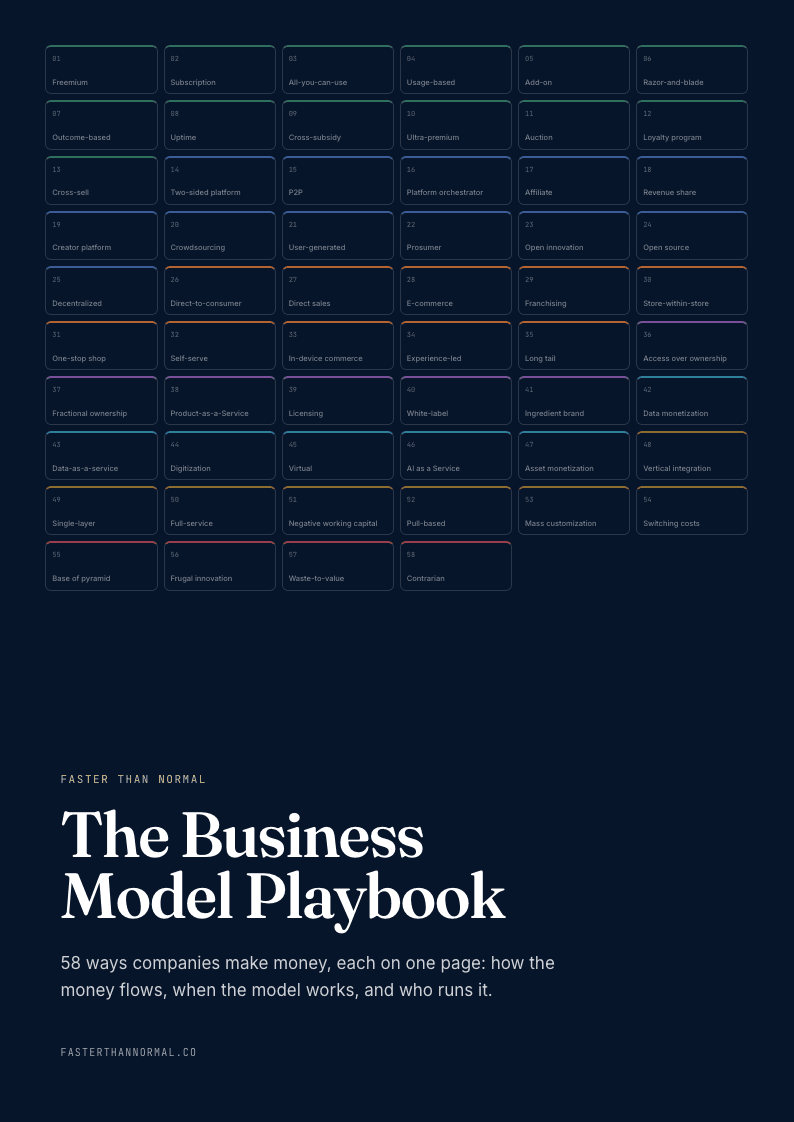
Free playbook
Get The Business Model Playbook
58 business models, one visual page each: how the money flows, the metrics that matter, and who runs it. Free when you join the Faster Than Normal email.
Free. No spam. Unsubscribe anytime.