
Contents
Book summary
The Jordan Rules: The Inside Story of Michael Jordan and the Chicago Bulls
by Sam Smith
The Core Premise
Michael Jordan's teammates often despised him more than opposing players did. Sam Smith's unprecedented access to the Chicago Bulls during their 1990-91 championship season revealed a superstar whose relentless pursuit of excellence bordered on psychological warfare against his own team. The Jordan Rules exposes the brutal reality behind championship culture: that transformational leadership often requires destroying people's comfort zones, even when those people are already elite performers.
Smith documents what he calls the "Jordan Treatment" — a systematic campaign of verbal assault, public humiliation, and strategic isolation that Jordan deployed against teammates he deemed insufficiently committed. When center Will Perdue struggled in practice, Jordan didn't offer encouragement; he launched into profanity-laced tirades that left Perdue questioning his career choice. When rookie Scott Williams made mistakes, Jordan would freeze him out of plays entirely, forcing coach Phil Jackson to intervene. This wasn't random cruelty — it was Jordan's calculated method for elevating team performance by making mediocrity more painful than excellence.
The book reveals Jackson's "Triangle Offense" as more than basketball strategy; it was organizational psychology designed to channel Jordan's dominance productively. Jackson understood that Jordan's competitive pathology could either destroy team chemistry or forge it into something unbreakable. The Triangle forced Jordan to trust teammates while giving him multiple scoring options — a framework that transformed individual brilliance into systematic advantage. Jackson's approach demonstrates how exceptional leaders require exceptional management, not conventional motivation techniques.
Smith's access during team flights, locker room meetings, and private conversations provides a masterclass in how championship organizations actually function versus how they appear publicly. The Bulls' success required teammates like Scottie Pippen to absorb Jordan's attacks while maintaining their own performance standards, creating what Smith terms a "culture of constructive suffering." Players learned to channel their resentment of Jordan into improved play, understanding that his approval was earned only through results, never effort alone.
The practical implications extend far beyond sports. Jordan's methods reveal how transformational leaders create urgency and accountability in high-performing environments. His technique of selective praise — celebrating Horace Grant's defense while destroying his offensive confidence — shows how elite leaders separate different performance domains to maximize improvement. The Bulls' championship run demonstrates that sustainable excellence requires building systems that can harness difficult personalities rather than smoothing their edges. Smith proves that understanding the psychological mechanics of championship culture matters more than inspiring platitudes about teamwork.
The New York Times Bestseller, updated With a New Introduction This is the 20th anniversary of the explosive bestseller that changed the way the world viewed one of the greatest athletes in history, revealing for the first time Michael Jordan's relentless drive to win anything and everything, at any cost. NBA Hall of Fame columnist Sam Smith had unlimited access to the team and its players during their championship 1991-92 season, which he details in the new introduction, along with candid revelations about his sources, and the reaction from Michael, his teammates, the media, and the fans when the book blasted onto the bestseller lists in 1992 (where it stayed for three months). With more than a million copies in print, The Jordan Rules remains the ultimate inside look at one of the most legendary teams in sports history.
The Jordan Rules: The Inside Story of Michael Jordan and the Chicago Bulls by Sam Smith belongs on the short shelf of books that change how you notice decisions in the wild. Whether you agree with every claim or not, the frame it offers is portable: you can apply it in meetings, investing, hiring, and personal trade-offs without carrying the whole volume.
Many readers return to this book because it names patterns that felt familiar but unnamed. Naming is leverage: once you can point to a mechanism, you can design around it. One through-line is “The Jordan Treatment: Jordan's systematic use of verbal intimidation, public criticism, and strategic exclusion to push teammates beyond their comfort zones. He would identify each player's psychologi” and its implications for judgment under uncertainty.
If you are reading for execution, translate each chapter into a testable habit: one prompt before a big decision, one review question after a project, one constraint you will respect next quarter. Theory becomes useful when it shows up in calendars, not only in margins.
Finally, pair this book with opposing voices. The strongest readers stress-test the thesis against cases where the advice fails, note the boundary conditions, and keep a short list of when not to use this lens. That discipline is how summaries become judgment.
Long-form books reward spaced attention: read a chapter, sleep, then write a half-page memo titled “What would I do differently on Monday?” If you cannot answer with specifics, the idea has not yet landed.
Use The Jordan Rules: The Inside Story of Michael Jordan and the Chicago Bulls as a conversation starter with peers who have different incentives. The disagreements often reveal which parts of the book are robust and which are fragile when power, risk, and time horizons change.
Key Ideas and Arguments
The Jordan Treatment: Jordan's systematic use of verbal intimidation, public criticism, and strategic exclusion to push teammates beyond their comfort zones. He would identify each player's psychological weak points and attack them relentlessly until they either elevated their performance or broke under the pressure.. This idea shows up repeatedly in The Jordan Rules: The Inside Story of Michael Jordan and the Chicago Bulls: separate the definition from the examples, then ask where the author's evidence is strongest and where anecdotes do most of the work. Consider writing a counterexample: a situation where applying the idea literally would misfire, and what guardrail you would add.
Constructive Suffering Culture: The organizational environment where team members channel resentment and frustration from harsh treatment into improved performance. Players learned that surviving Jordan's criticism was a prerequisite for earning respect and playing time in crucial moments.. This idea shows up repeatedly in The Jordan Rules: The Inside Story of Michael Jordan and the Chicago Bulls: separate the definition from the examples, then ask where the author's evidence is strongest and where anecdotes do most of the work. Consider writing a counterexample: a situation where applying the idea literally would misfire, and what guardrail you would add.
Triangle Offense: Phil Jackson's strategic system that forced Jordan to distribute the ball while creating multiple scoring options, serving as both basketball strategy and management tool to harness individual dominance for team success.. This idea shows up repeatedly in The Jordan Rules: The Inside Story of Michael Jordan and the Chicago Bulls: separate the definition from the examples, then ask where the author's evidence is strongest and where anecdotes do most of the work. Consider writing a counterexample: a situation where applying the idea literally would misfire, and what guardrail you would add.
Selective Domain Targeting: Jordan's technique of praising players in areas where they excelled while systematically undermining their confidence in weaker areas, forcing them to focus improvement efforts where the team needed it most.. This idea shows up repeatedly in The Jordan Rules: The Inside Story of Michael Jordan and the Chicago Bulls: separate the definition from the examples, then ask where the author's evidence is strongest and where anecdotes do most of the work. Consider writing a counterexample: a situation where applying the idea literally would misfire, and what guardrail you would add.
Performance-Only Approval: Jordan's refusal to acknowledge effort, attitude, or potential — only measurable results in games and practice, creating an environment where excuses became impossible and accountability was absolute.. This idea shows up repeatedly in The Jordan Rules: The Inside Story of Michael Jordan and the Chicago Bulls: separate the definition from the examples, then ask where the author's evidence is strongest and where anecdotes do most of the work. Consider writing a counterexample: a situation where applying the idea literally would misfire, and what guardrail you would add.
Strategic Isolation: Jordan's method of freezing out players who failed to meet his standards, removing them from plays and conversations until they demonstrated the commitment level he demanded.. This idea shows up repeatedly in The Jordan Rules: The Inside Story of Michael Jordan and the Chicago Bulls: separate the definition from the examples, then ask where the author's evidence is strongest and where anecdotes do most of the work. Consider writing a counterexample: a situation where applying the idea literally would misfire, and what guardrail you would add.
Championship Threshold Psychology: The mental framework that separates good players from champions, requiring the ability to perform under extreme internal and external pressure while maintaining focus on team objectives.. This idea shows up repeatedly in The Jordan Rules: The Inside Story of Michael Jordan and the Chicago Bulls: separate the definition from the examples, then ask where the author's evidence is strongest and where anecdotes do most of the work. Consider writing a counterexample: a situation where applying the idea literally would misfire, and what guardrail you would add.
Deeper Themes and Context
The Jordan Rules: The Inside Story of Michael Jordan and the Chicago Bulls is not only a catalogue of claims; it is a stance on how to interpret success, failure, and ambiguity. Readers who engage charitably still ask: which recommendations are universal, which are culturally situated, and which require institutional support you do not have?
Comparing the book's prescriptions to your own context is part of the work. A strategy that assumes abundant capital, patient stakeholders, or long feedback loops will read differently if you are resource-constrained, early in a career, or operating under regulatory pressure. Translation beats transcription.
The book also invites you to notice what it does not say. Silences can be instructive: topics the author avoids, counterexamples that never appear, or metrics that are praised without definition. A serious reader keeps a missing-evidence note alongside a to-try note.
Historically, the most influential business and biography titles survive because they double as vocabulary. Teams that share a phrase from The Jordan Rules: The Inside Story of Michael Jordan and the Chicago Bulls move faster only when they also share a definition and a worked example, otherwise they talk past each other with the same words.
How to Apply the Lessons
Connected Mental Models
Who Should Read This
Start here if you want a serious, book-length argument rather than a thread of bullet points. The Jordan Rules: The Inside Story of Michael Jordan and the Chicago Bulls rewards readers who will sketch their own examples, argue back in the margins, and connect chapters to decisions they are facing this quarter.
It is also useful as a shared vocabulary for teams: a common chapter reference can shorten debate if everyone agrees what the term means in practice. If your team only shares the title, not the definition, expect confusion.
Skip or skim if you need a narrow tactical recipe with no theory; this summary preserves the ideas, but the book's value is often in the extended case material and the author's sequencing.
Analyst's Take
Test Yourself
Check your grasp of the book’s moves
A colleague quotes The Jordan Rules: The Inside Story of Michael Jordan and the Chicago Bulls to justify a risky decision. What should you verify first?
You finished The Jordan Rules: The Inside Story of Michael Jordan and the Chicago Bulls and want behaviour change this week.
Further Reading
Continue exploring


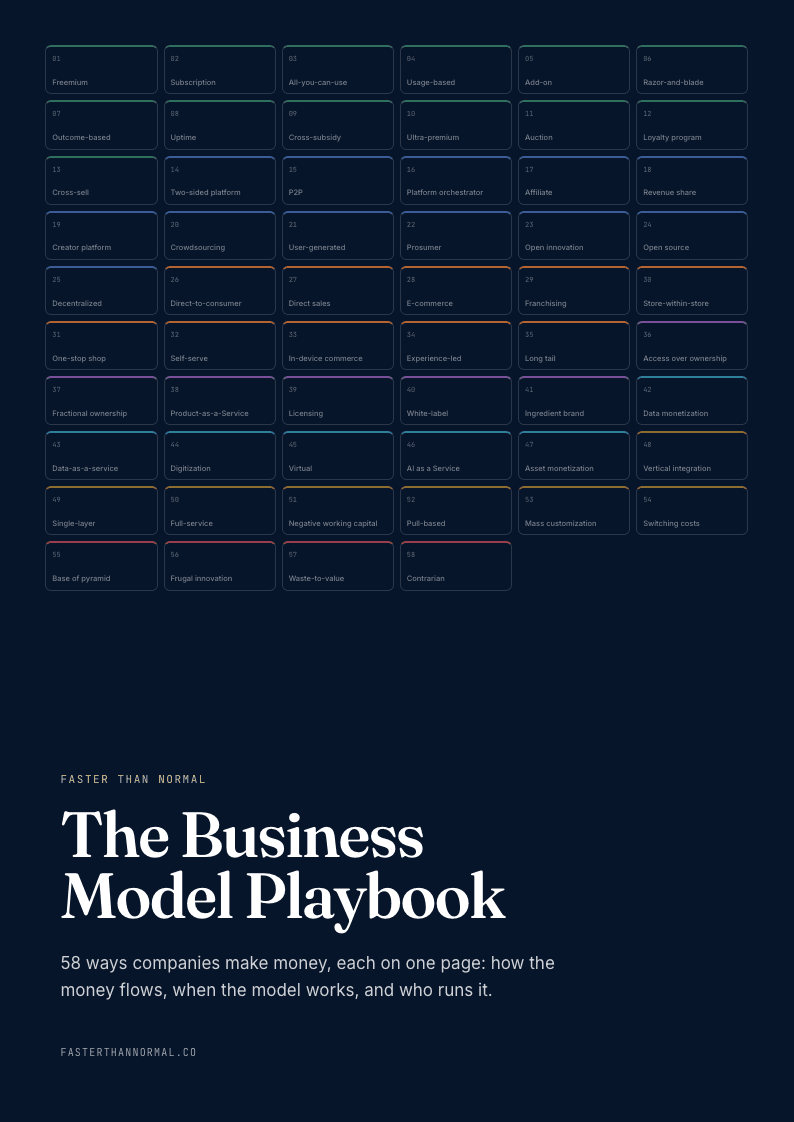
Free playbook
Get The Business Model Playbook
58 business models, one visual page each: how the money flows, the metrics that matter, and who runs it. Free when you join the Faster Than Normal email.
Free. No spam. Unsubscribe anytime.