

Contents
Book summary
The Invisible Billionaire: Daniel Ludwig
by Jerry Shields
The Core Premise
Daniel Ludwig built one of the world's largest fortunes through deliberate obscurity, amassing billions while remaining virtually unknown to the public. Shields reveals how Ludwig's systematic approach to contrarian investing and operational efficiency created a shipping and real estate empire that spanned six decades. Ludwig's core philosophy centered on buying distressed assets during market downturns, then applying rigorous cost control and technological innovation to transform them into cash-generating machines. His Amazon rainforest project, Jari, exemplifies both his visionary thinking and operational blind spots—a $1 billion attempt to create a self-sufficient pulp and paper operation that ultimately failed due to environmental and political complexities he underestimated. Ludwig's 'capital recycling system' involved constantly selling mature assets at peak valuations to fund new acquisitions in depressed markets. He pioneered the use of flags of convenience in shipping and revolutionized supertanker construction through modular building techniques. Unlike publicity-seeking tycoons, Ludwig operated through layers of holding companies and trusted lieutenants, believing that attention invited regulation and competition. His extreme frugality—flying coach while worth billions—reflected a Depression-era mindset that viewed every dollar as productive capital rather than consumption opportunity. The book demonstrates how Ludwig's combination of patient capital, operational focus, and systematic contrarianism generated extraordinary returns, while his secretiveness allowed him to operate in markets others overlooked or abandoned.
This thread continues the same argument: Daniel Ludwig built one of the world's largest fortunes through deliberate obscurity, amassing billions while remaining virtually unknown to the public. Shields reveals how Ludwig's systematic approac…
This thread continues the same argument: Daniel Ludwig built one of the world's largest fortunes through deliberate obscurity, amassing billions while remaining virtually unknown to the public. Shields reveals how Ludwig's systematic approac…
This thread continues the same argument: Daniel Ludwig built one of the world's largest fortunes through deliberate obscurity, amassing billions while remaining virtually unknown to the public. Shields reveals how Ludwig's systematic approac…
The Invisible Billionaire: Daniel Ludwig by Jerry Shields belongs on the short shelf of books that change how you notice decisions in the wild. Whether you agree with every claim or not, the frame it offers is portable: you can apply it in meetings, investing, hiring, and personal trade-offs without carrying the whole volume.
Many readers return to this book because it names patterns that felt familiar but unnamed. Naming is leverage: once you can point to a mechanism, you can design around it. One through-line is “Capital Recycling System: Ludwig's practice of continuously selling mature, fully-valued assets to fund acquisitions in distressed or overlooked markets, maintaining a constant cycle of capital deploy” and its implications for judgment under uncertainty.
If you are reading for execution, translate each chapter into a testable habit: one prompt before a big decision, one review question after a project, one constraint you will respect next quarter. Theory becomes useful when it shows up in calendars, not only in margins.
Finally, pair this book with opposing voices. The strongest readers stress-test the thesis against cases where the advice fails, note the boundary conditions, and keep a short list of when not to use this lens. That discipline is how summaries become judgment.
Long-form books reward spaced attention: read a chapter, sleep, then write a half-page memo titled “What would I do differently on Monday?” If you cannot answer with specifics, the idea has not yet landed.
Use The Invisible Billionaire: Daniel Ludwig as a conversation starter with peers who have different incentives. The disagreements often reveal which parts of the book are robust and which are fragile when power, risk, and time horizons change.
Key Ideas and Arguments
Capital Recycling System: Ludwig's practice of continuously selling mature, fully-valued assets to fund acquisitions in distressed or overlooked markets, maintaining a constant cycle of capital deployment.. This idea shows up repeatedly in The Invisible Billionaire: Daniel Ludwig: separate the definition from the examples, then ask where the author's evidence is strongest and where anecdotes do most of the work. Consider writing a counterexample: a situation where applying the idea literally would misfire, and what guardrail you would add.
Operational Leverage: Focus on industries requiring large capital investments but offering significant operational advantages once scale is achieved, such as shipping and natural resource extraction.. This idea shows up repeatedly in The Invisible Billionaire: Daniel Ludwig: separate the definition from the examples, then ask where the author's evidence is strongest and where anecdotes do most of the work. Consider writing a counterexample: a situation where applying the idea literally would misfire, and what guardrail you would add.
Contrarian Market Timing: Systematic approach to buying when others are selling and selling when others are buying, particularly in cyclical industries like shipping and real estate.. This idea shows up repeatedly in The Invisible Billionaire: Daniel Ludwig: separate the definition from the examples, then ask where the author's evidence is strongest and where anecdotes do most of the work. Consider writing a counterexample: a situation where applying the idea literally would misfire, and what guardrail you would add.
Vertical Integration Strategy: Building control over entire value chains rather than operating at single points, reducing costs and capturing more value across the production process.. This idea shows up repeatedly in The Invisible Billionaire: Daniel Ludwig: separate the definition from the examples, then ask where the author's evidence is strongest and where anecdotes do most of the work. Consider writing a counterexample: a situation where applying the idea literally would misfire, and what guardrail you would add.
Stealth Wealth Philosophy: Deliberate avoidance of publicity and public attention to prevent regulatory scrutiny, competitive response, and political interference in business operations.. This idea shows up repeatedly in The Invisible Billionaire: Daniel Ludwig: separate the definition from the examples, then ask where the author's evidence is strongest and where anecdotes do most of the work. Consider writing a counterexample: a situation where applying the idea literally would misfire, and what guardrail you would add.
Technology-Driven Efficiency: Early adoption of new technologies and construction techniques to reduce operating costs and improve asset utilization rates.. This idea shows up repeatedly in The Invisible Billionaire: Daniel Ludwig: separate the definition from the examples, then ask where the author's evidence is strongest and where anecdotes do most of the work. Consider writing a counterexample: a situation where applying the idea literally would misfire, and what guardrail you would add.
Political Risk Management: Sophisticated understanding of how government policies and international relations affect business operations, particularly in regulated industries.. This idea shows up repeatedly in The Invisible Billionaire: Daniel Ludwig: separate the definition from the examples, then ask where the author's evidence is strongest and where anecdotes do most of the work. Consider writing a counterexample: a situation where applying the idea literally would misfire, and what guardrail you would add.
Deeper Themes and Context
The Invisible Billionaire: Daniel Ludwig is not only a catalogue of claims; it is a stance on how to interpret success, failure, and ambiguity. Readers who engage charitably still ask: which recommendations are universal, which are culturally situated, and which require institutional support you do not have?
Comparing the book's prescriptions to your own context is part of the work. A strategy that assumes abundant capital, patient stakeholders, or long feedback loops will read differently if you are resource-constrained, early in a career, or operating under regulatory pressure. Translation beats transcription.
The book also invites you to notice what it does not say. Silences can be instructive: topics the author avoids, counterexamples that never appear, or metrics that are praised without definition. A serious reader keeps a missing-evidence note alongside a to-try note.
Historically, the most influential business and biography titles survive because they double as vocabulary. Teams that share a phrase from The Invisible Billionaire: Daniel Ludwig move faster only when they also share a definition and a worked example, otherwise they talk past each other with the same words.
How to Apply the Lessons
Connected Mental Models
Who Should Read This
Start here if you want a serious, book-length argument rather than a thread of bullet points. The Invisible Billionaire: Daniel Ludwig rewards readers who will sketch their own examples, argue back in the margins, and connect chapters to decisions they are facing this quarter.
It is also useful as a shared vocabulary for teams: a common chapter reference can shorten debate if everyone agrees what the term means in practice. If your team only shares the title, not the definition, expect confusion.
Skip or skim if you need a narrow tactical recipe with no theory; this summary preserves the ideas, but the book's value is often in the extended case material and the author's sequencing.
Analyst's Take
Test Yourself
Check your grasp of the book’s moves
A colleague quotes The Invisible Billionaire: Daniel Ludwig to justify a risky decision. What should you verify first?
You finished The Invisible Billionaire: Daniel Ludwig and want behaviour change this week.
Further Reading
Continue exploring


Free playbook
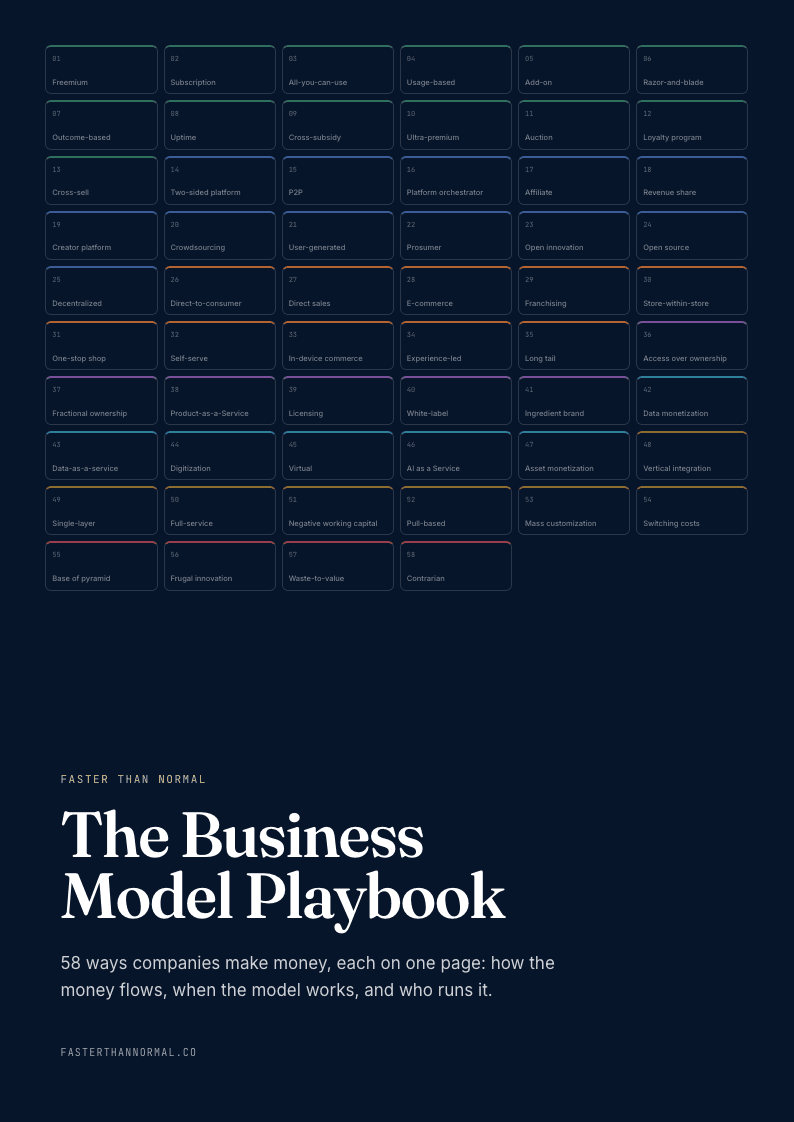
Get The Business Model Playbook
58 business models, one visual page each: how the money flows, the metrics that matter, and who runs it. Free when you join the Faster Than Normal email.
Free. No spam. Unsubscribe anytime.