

Contents
Book summary
Steven Spielberg: A Biography
by Joseph McBride
The Core Premise
Steven Spielberg built the most commercially successful directing career in Hollywood history not through artistic pretension or auteur theory, but by mastering the delicate balance between spectacle and intimacy—creating blockbusters that somehow felt personal. McBride's exhaustive biography reveals how Spielberg's genius lies not in revolutionary techniques, but in his ability to weaponize nostalgia and childhood wonder as tools for mass emotional manipulation, turning moviegoing into a shared cultural experience that transcends demographics.
Spielberg's "Invisible Direction" philosophy—where technical mastery serves story rather than announcing itself—became the template for modern blockbuster filmmaking. Unlike contemporaries who flaunted their directorial prowess, Spielberg perfected what McBride calls "Emotional Architecture," structuring films around precisely calibrated peaks and valleys of tension. The mechanical shark's failures in "Jaws" forced Spielberg to rely on suggestion rather than spectacle, accidentally discovering that what audiences imagine is more powerful than what they see. This principle—scarcity creating desire—became foundational to his approach across genres. When "E.T." broke box office records, it wasn't because of special effects but because Spielberg had mastered the art of making audiences feel like children again, accessing emotions they thought they'd lost.
The biography exposes Spielberg's "Suburban Mythology" framework—his systematic transformation of middle-class anxiety into adventure narratives. McBride documents how Spielberg consistently mines his own childhood trauma (his parents' divorce, feeling like an outsider) to create universal stories of family dysfunction and redemption. "Close Encounters of the Third Kind" literalizes the absent father returning home, while "Indiana Jones" represents the adventure-seeking escape from domestic responsibility. This isn't accidental psychology—it's strategic emotional engineering. Spielberg identified the core tensions of American suburban life and built billion-dollar franchises around resolving them through fantasy.
For executives and founders, Spielberg's career demonstrates the power of what McBride terms "Accessible Excellence"—creating products that simultaneously serve mass markets and satisfy sophisticated consumers. Spielberg never dumbed down his films; he elevated popular entertainment by treating audiences as intelligent while delivering the emotional payoffs they craved. His "Demographic Fusion" strategy—making films that work for children and adults simultaneously—expanded market reach without compromising artistic integrity. When launching DreamWorks SKG, Spielberg applied these same principles to business strategy: combine creative ambition with commercial discipline, build emotional connections with stakeholders, and never underestimate the audience's sophistication. The studio's early success proved that the same psychological insights that made great films could create great companies.
From "Jaws" to "Saving Private Ryan", this impeccable biography reveals hidden dimensions of the director's creative evolution while illuminating each film. 44 photos.
Steven Spielberg: A Biography by Joseph McBride belongs on the short shelf of books that change how you notice decisions in the wild. Whether you agree with every claim or not, the frame it offers is portable: you can apply it in meetings, investing, hiring, and personal trade-offs without carrying the whole volume.
Many readers return to this book because it names patterns that felt familiar but unnamed. Naming is leverage: once you can point to a mechanism, you can design around it. One through-line is “Invisible Direction: Spielberg's philosophy of hiding technical complexity behind seamless storytelling, where masterful cinematography and editing serve the narrative rather than calling attention to” and its implications for judgment under uncertainty.
If you are reading for execution, translate each chapter into a testable habit: one prompt before a big decision, one review question after a project, one constraint you will respect next quarter. Theory becomes useful when it shows up in calendars, not only in margins.
Finally, pair this book with opposing voices. The strongest readers stress-test the thesis against cases where the advice fails, note the boundary conditions, and keep a short list of when not to use this lens. That discipline is how summaries become judgment.
Long-form books reward spaced attention: read a chapter, sleep, then write a half-page memo titled “What would I do differently on Monday?” If you cannot answer with specifics, the idea has not yet landed.
Use Steven Spielberg: A Biography as a conversation starter with peers who have different incentives. The disagreements often reveal which parts of the book are robust and which are fragile when power, risk, and time horizons change.
Key Ideas and Arguments
Invisible Direction: Spielberg's philosophy of hiding technical complexity behind seamless storytelling, where masterful cinematography and editing serve the narrative rather than calling attention to themselves. Unlike auteur directors who announce their presence, Spielberg makes audiences forget they're watching a constructed film.. This idea shows up repeatedly in Steven Spielberg: A Biography: separate the definition from the examples, then ask where the author's evidence is strongest and where anecdotes do most of the work. Consider writing a counterexample: a situation where applying the idea literally would misfire, and what guardrail you would add.
Emotional Architecture: The systematic structuring of films around precisely calibrated emotional peaks and valleys, treating audience feelings as engineered experiences rather than accidental byproducts. Spielberg maps out emotional journeys the way architects design buildings.. This idea shows up repeatedly in Steven Spielberg: A Biography: separate the definition from the examples, then ask where the author's evidence is strongest and where anecdotes do most of the work. Consider writing a counterexample: a situation where applying the idea literally would misfire, and what guardrail you would add.
Suburban Mythology: Spielberg's framework for transforming middle-class American anxieties into universal adventure narratives, systematically mining suburban dysfunction to create stories of family reconciliation and personal growth. Every alien encounter becomes a metaphor for family reunion.. This idea shows up repeatedly in Steven Spielberg: A Biography: separate the definition from the examples, then ask where the author's evidence is strongest and where anecdotes do most of the work. Consider writing a counterexample: a situation where applying the idea literally would misfire, and what guardrail you would add.
Accessible Excellence: The strategy of creating sophisticated entertainment that works simultaneously for mass and elite audiences, refusing to choose between commercial success and artistic integrity. Spielberg proved that popular doesn't have to mean simplistic.. This idea shows up repeatedly in Steven Spielberg: A Biography: separate the definition from the examples, then ask where the author's evidence is strongest and where anecdotes do most of the work. Consider writing a counterexample: a situation where applying the idea literally would misfire, and what guardrail you would add.
Demographic Fusion: The business approach of designing products (films) that satisfy multiple age groups and market segments simultaneously, expanding reach without diluting the core experience. One movie sells tickets to children, parents, and grandparents.. This idea shows up repeatedly in Steven Spielberg: A Biography: separate the definition from the examples, then ask where the author's evidence is strongest and where anecdotes do most of the work. Consider writing a counterexample: a situation where applying the idea literally would misfire, and what guardrail you would add.
Scarcity Principle: The discovery that what audiences imagine is more powerful than what they see, using restraint and suggestion rather than explicit spectacle to create emotional impact. The shark in 'Jaws' terrifies precisely because it's rarely visible.. This idea shows up repeatedly in Steven Spielberg: A Biography: separate the definition from the examples, then ask where the author's evidence is strongest and where anecdotes do most of the work. Consider writing a counterexample: a situation where applying the idea literally would misfire, and what guardrail you would add.
Nostalgia Engineering: The systematic use of childhood imagery and emotions to create universal appeal, treating nostalgia as a renewable resource that can be harvested across generations. Spielberg doesn't just remember childhood; he manufactures it.. This idea shows up repeatedly in Steven Spielberg: A Biography: separate the definition from the examples, then ask where the author's evidence is strongest and where anecdotes do most of the work. Consider writing a counterexample: a situation where applying the idea literally would misfire, and what guardrail you would add.
Deeper Themes and Context
Steven Spielberg: A Biography is not only a catalogue of claims; it is a stance on how to interpret success, failure, and ambiguity. Readers who engage charitably still ask: which recommendations are universal, which are culturally situated, and which require institutional support you do not have?
Comparing the book's prescriptions to your own context is part of the work. A strategy that assumes abundant capital, patient stakeholders, or long feedback loops will read differently if you are resource-constrained, early in a career, or operating under regulatory pressure. Translation beats transcription.
The book also invites you to notice what it does not say. Silences can be instructive: topics the author avoids, counterexamples that never appear, or metrics that are praised without definition. A serious reader keeps a missing-evidence note alongside a to-try note.
Historically, the most influential business and biography titles survive because they double as vocabulary. Teams that share a phrase from Steven Spielberg: A Biography move faster only when they also share a definition and a worked example, otherwise they talk past each other with the same words.
How to Apply the Lessons
Connected Mental Models
Who Should Read This
Start here if you want a serious, book-length argument rather than a thread of bullet points. Steven Spielberg: A Biography rewards readers who will sketch their own examples, argue back in the margins, and connect chapters to decisions they are facing this quarter.
It is also useful as a shared vocabulary for teams: a common chapter reference can shorten debate if everyone agrees what the term means in practice. If your team only shares the title, not the definition, expect confusion.
Skip or skim if you need a narrow tactical recipe with no theory; this summary preserves the ideas, but the book's value is often in the extended case material and the author's sequencing.
Analyst's Take
Test Yourself
Check your grasp of the book’s moves
A colleague quotes Steven Spielberg: A Biography to justify a risky decision. What should you verify first?
You finished Steven Spielberg: A Biography and want behaviour change this week.
Further Reading
Continue exploring


Free playbook
Get The Business Model Playbook
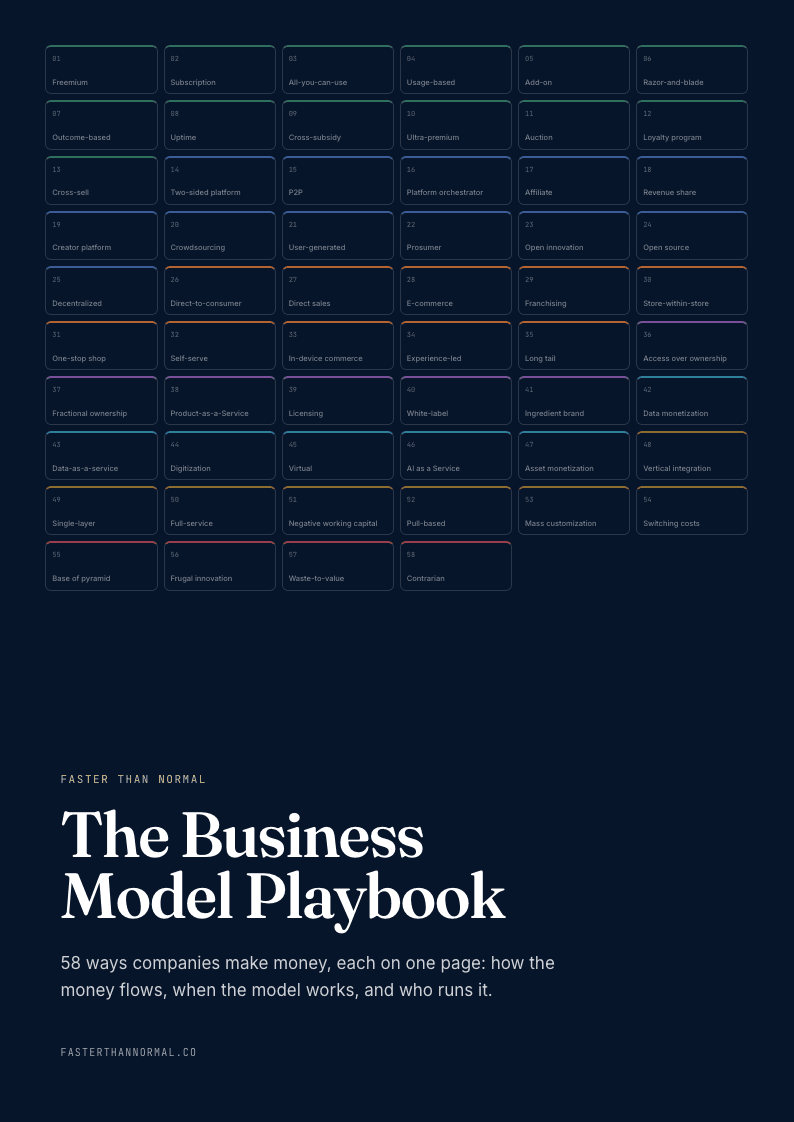
58 business models, one visual page each: how the money flows, the metrics that matter, and who runs it. Free when you join the Faster Than Normal email.
Free. No spam. Unsubscribe anytime.