

Contents
Book summary
Showboat: The Life of Kobe Bryant
by Roland Lazenby
The Core Premise
Kobe Bryant transformed himself from a talented teenager who couldn't speak during interviews into the most psychologically dominant athlete of his generation through what Roland Lazenby reveals as systematic self-construction. The five-time NBA champion didn't inherit greatness—he engineered it through obsessive study, relentless practice, and the deliberate cultivation of what he called the "Mamba Mentality." This wasn't natural talent; it was manufactured excellence through mental discipline that redefined what peak performance means.
Lazenby exposes the architecture of Bryant's psychological dominance through his "Detail-Oriented Preparation" system—a framework where Bryant studied opponents' tendencies with forensic precision, memorizing their shooting percentages from specific court positions and their behavioral patterns under pressure. When facing the Boston Celtics in the 2010 Finals, Bryant analyzed hours of film to identify Paul Pierce's subtle tells before shooting, then used this intelligence to position himself for steals and deflections. This preparation extended beyond basketball: Bryant studied the psychological profiles of competitors, learning how to trigger doubt through specific verbal and physical cues during games.
The book reveals Bryant's "Obsessive Learning Protocol"—his method of deconstructing excellence in any field and adapting it to basketball. Bryant studied the footwork of soccer players, the precision of surgeons, and the mental preparation of classical musicians. He spent an entire summer working with ballet dancers to improve his balance and body control, techniques that became signature elements of his fadeaway jump shot. When other players relied on athletic gifts, Bryant built a systematic approach to skill development that he called "going to the lab."
Lazenby demonstrates how Bryant's "Psychological Warfare Framework" became his competitive edge—the systematic use of intimidation, mind games, and emotional manipulation to gain advantages. Bryant studied his teammates' psychological profiles as intensely as opponents', knowing exactly which buttons to push to elevate their performance. During practice, he would deliberately target younger players' insecurities, not from malice but as preparation for hostile road environments. This calculated approach to human psychology separated Bryant from peers who relied on encouragement and positivity.
For executives and founders, Bryant's transformation blueprint offers a masterclass in systematic self-improvement and organizational leadership. His "Reverse Engineering Excellence" method—identifying the best performers in any field and deconstructing their processes—applies directly to business strategy and product development. Bryant's obsession with preparation and psychological dominance provides a framework for competitive advantage that transcends sports, showing how manufactured intensity and systematic study can overcome natural talent and inherited advantages.
Showboat: The Life of Kobe Bryant by Roland Lazenby belongs on the short shelf of books that change how you notice decisions in the wild. Whether you agree with every claim or not, the frame it offers is portable: you can apply it in meetings, investing, hiring, and personal trade-offs without carrying the whole volume.
Many readers return to this book because it names patterns that felt familiar but unnamed. Naming is leverage: once you can point to a mechanism, you can design around it. One through-line is “Mamba Mentality: Bryant's systematic approach to achieving excellence through obsessive preparation, psychological dominance, and relentless skill development. Unlike natural talent, this was a manufa” and its implications for judgment under uncertainty.
If you are reading for execution, translate each chapter into a testable habit: one prompt before a big decision, one review question after a project, one constraint you will respect next quarter. Theory becomes useful when it shows up in calendars, not only in margins.
Finally, pair this book with opposing voices. The strongest readers stress-test the thesis against cases where the advice fails, note the boundary conditions, and keep a short list of when not to use this lens. That discipline is how summaries become judgment.
Long-form books reward spaced attention: read a chapter, sleep, then write a half-page memo titled “What would I do differently on Monday?” If you cannot answer with specifics, the idea has not yet landed.
Use Showboat: The Life of Kobe Bryant as a conversation starter with peers who have different incentives. The disagreements often reveal which parts of the book are robust and which are fragile when power, risk, and time horizons change.
Key Ideas and Arguments
Mamba Mentality: Bryant's systematic approach to achieving excellence through obsessive preparation, psychological dominance, and relentless skill development. Unlike natural talent, this was a manufactured mindset that could be applied to any competitive endeavor.. This idea shows up repeatedly in Showboat: The Life of Kobe Bryant: separate the definition from the examples, then ask where the author's evidence is strongest and where anecdotes do most of the work. Consider writing a counterexample: a situation where applying the idea literally would misfire, and what guardrail you would add.
Detail-Oriented Preparation: Bryant's framework for studying opponents and situations with forensic precision, including memorizing shooting percentages, behavioral patterns, and psychological tells. He treated game preparation like intelligence gathering.. This idea shows up repeatedly in Showboat: The Life of Kobe Bryant: separate the definition from the examples, then ask where the author's evidence is strongest and where anecdotes do most of the work. Consider writing a counterexample: a situation where applying the idea literally would misfire, and what guardrail you would add.
Obsessive Learning Protocol: Bryant's method of studying excellence in unrelated fields and adapting techniques to basketball, from ballet dancers' balance to surgeons' precision. He systematically borrowed from any discipline that could improve performance.. This idea shows up repeatedly in Showboat: The Life of Kobe Bryant: separate the definition from the examples, then ask where the author's evidence is strongest and where anecdotes do most of the work. Consider writing a counterexample: a situation where applying the idea literally would misfire, and what guardrail you would add.
Psychological Warfare Framework: Bryant's calculated use of intimidation, mind games, and emotional manipulation to gain competitive advantages over both opponents and teammates. He studied human psychology as intensely as basketball fundamentals.. This idea shows up repeatedly in Showboat: The Life of Kobe Bryant: separate the definition from the examples, then ask where the author's evidence is strongest and where anecdotes do most of the work. Consider writing a counterexample: a situation where applying the idea literally would misfire, and what guardrail you would add.
Reverse Engineering Excellence: Bryant's process of identifying the best performers in any field and deconstructing their methods to find applicable techniques. He treated every expert as a potential source of competitive advantage.. This idea shows up repeatedly in Showboat: The Life of Kobe Bryant: separate the definition from the examples, then ask where the author's evidence is strongest and where anecdotes do most of the work. Consider writing a counterexample: a situation where applying the idea literally would misfire, and what guardrail you would add.
Manufactured Intensity: Bryant's belief that peak performance could be systematically created through preparation and mental discipline rather than relying on natural gifts or emotional inspiration. He built intensity like a skill.. This idea shows up repeatedly in Showboat: The Life of Kobe Bryant: separate the definition from the examples, then ask where the author's evidence is strongest and where anecdotes do most of the work. Consider writing a counterexample: a situation where applying the idea literally would misfire, and what guardrail you would add.
Going to the Lab: Bryant's term for systematic skill development through repetitive practice and experimentation. He treated improvement like scientific research, testing techniques until they became instinctive.. This idea shows up repeatedly in Showboat: The Life of Kobe Bryant: separate the definition from the examples, then ask where the author's evidence is strongest and where anecdotes do most of the work. Consider writing a counterexample: a situation where applying the idea literally would misfire, and what guardrail you would add.
Deeper Themes and Context
Showboat: The Life of Kobe Bryant is not only a catalogue of claims; it is a stance on how to interpret success, failure, and ambiguity. Readers who engage charitably still ask: which recommendations are universal, which are culturally situated, and which require institutional support you do not have?
Comparing the book's prescriptions to your own context is part of the work. A strategy that assumes abundant capital, patient stakeholders, or long feedback loops will read differently if you are resource-constrained, early in a career, or operating under regulatory pressure. Translation beats transcription.
The book also invites you to notice what it does not say. Silences can be instructive: topics the author avoids, counterexamples that never appear, or metrics that are praised without definition. A serious reader keeps a missing-evidence note alongside a to-try note.
Historically, the most influential business and biography titles survive because they double as vocabulary. Teams that share a phrase from Showboat: The Life of Kobe Bryant move faster only when they also share a definition and a worked example, otherwise they talk past each other with the same words.
How to Apply the Lessons
Connected Mental Models
Who Should Read This
Start here if you want a serious, book-length argument rather than a thread of bullet points. Showboat: The Life of Kobe Bryant rewards readers who will sketch their own examples, argue back in the margins, and connect chapters to decisions they are facing this quarter.
It is also useful as a shared vocabulary for teams: a common chapter reference can shorten debate if everyone agrees what the term means in practice. If your team only shares the title, not the definition, expect confusion.
Skip or skim if you need a narrow tactical recipe with no theory; this summary preserves the ideas, but the book's value is often in the extended case material and the author's sequencing.
Analyst's Take
Test Yourself
Check your grasp of the book’s moves
A colleague quotes Showboat: The Life of Kobe Bryant to justify a risky decision. What should you verify first?
You finished Showboat: The Life of Kobe Bryant and want behaviour change this week.
Further Reading
Continue exploring


Free playbook
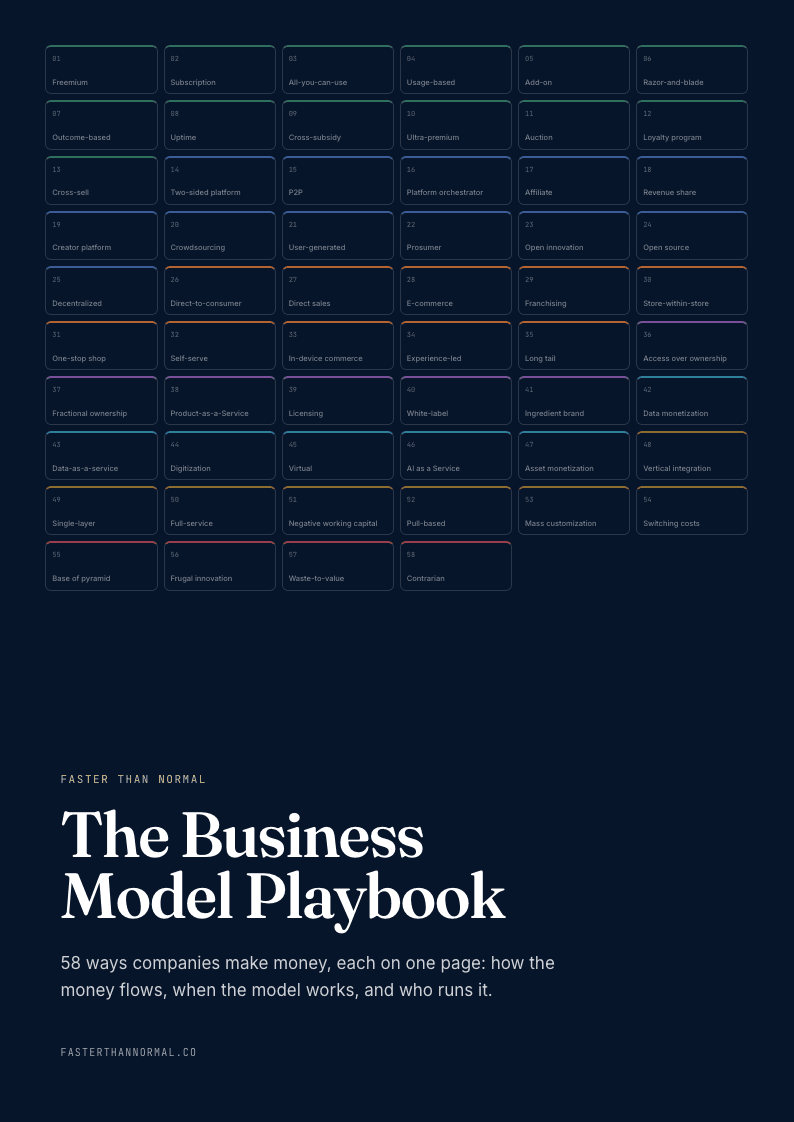
Get The Business Model Playbook
58 business models, one visual page each: how the money flows, the metrics that matter, and who runs it. Free when you join the Faster Than Normal email.
Free. No spam. Unsubscribe anytime.