

Contents
Book summary
Nemesis: Aristotle Onassis, Jackie O, and the Kennedy Love Triangle
by Peter Evans
The Core Premise
Power corrupts through proximity, not just possession — and Peter Evans proves this through the explosive triangle between Aristotle Onassis, Jackie Kennedy, and the Kennedy political machine. The world's richest man didn't just marry America's most famous widow; he orchestrated a decade-long campaign to penetrate and ultimately possess the mystique that had always eluded his billions. Evans reveals how Onassis weaponized intimacy, turning personal relationships into strategic acquisitions that would reshape global power dynamics.
Onassis operated by what Evans calls the "Acquisition Imperative" — the compulsive need to own what cannot be bought. Unlike other tycoons who accumulated assets, Onassis collected symbols of American power itself. He pursued Jackie Kennedy not despite her connection to Camelot, but because of it. The Greek shipping magnate understood that in the modern era, cultural capital trumps financial capital. His systematic courtship of Jackie — beginning while JFK was still alive — represented the ultimate hostile takeover: acquiring the Kennedy brand through marriage when he couldn't destroy it through competition.
The author documents Onassis's "Emotional Leverage Strategy" through two devastating case studies. First, his manipulation of Jackie's financial insecurity after RFK's assassination, when he positioned himself as the only man capable of protecting her children from further tragedy. Second, his psychological warfare against Ted Kennedy, whom he correctly identified as the primary obstacle to his Kennedy acquisition. Onassis deployed private investigators, strategic leaks, and financial pressure to neutralize Ted's influence over Jackie's decision-making. He didn't just propose marriage; he engineered circumstances where rejection became impossible.
Evans exposes how personal vendettas drive geopolitical outcomes through what he terms "Intimate Statecraft." Onassis's hatred of the Kennedys stemmed from their role in blocking his business interests during JFK's presidency, particularly his tanker deals with communist countries. His marriage to Jackie represented the ultimate revenge — transforming America's secular saint into the wife of a man the establishment considered morally compromised. The union damaged the Kennedy political brand precisely as Onassis intended, contributing to Ted Kennedy's failed presidential ambitions.
For executives, Evans demonstrates that emotional intelligence weaponized becomes more powerful than traditional leverage. Onassis succeeded where others failed because he understood that everyone — even icons — operates from psychological need, not rational calculation. His patient cultivation of dependency, his strategic timing during moments of vulnerability, and his willingness to absorb public criticism for private gain created a playbook for acquiring influence over seemingly untouchable targets. The lesson isn't moral but tactical: sustained psychological pressure, applied at moments of maximum vulnerability, can breach any defense.
Explores the feud between Aristotle Onassis and the Kennedy family, documenting Robert Kennedy's role in barring Onassis from U.S.trade and the shipping magnate's early relationship with Jacqueline Kennedy.
Nemesis: Aristotle Onassis, Jackie O, and the Kennedy Love Triangle by Peter Evans belongs on the short shelf of books that change how you notice decisions in the wild. Whether you agree with every claim or not, the frame it offers is portable: you can apply it in meetings, investing, hiring, and personal trade-offs without carrying the whole volume.
Many readers return to this book because it names patterns that felt familiar but unnamed. Naming is leverage: once you can point to a mechanism, you can design around it. One through-line is “Acquisition Imperative: Onassis's compulsive need to own symbols of power rather than just accumulate wealth. He pursued the Kennedy mystique because it represented the one form of American legitimacy” and its implications for judgment under uncertainty.
If you are reading for execution, translate each chapter into a testable habit: one prompt before a big decision, one review question after a project, one constraint you will respect next quarter. Theory becomes useful when it shows up in calendars, not only in margins.
Finally, pair this book with opposing voices. The strongest readers stress-test the thesis against cases where the advice fails, note the boundary conditions, and keep a short list of when not to use this lens. That discipline is how summaries become judgment.
Long-form books reward spaced attention: read a chapter, sleep, then write a half-page memo titled “What would I do differently on Monday?” If you cannot answer with specifics, the idea has not yet landed.
Use Nemesis: Aristotle Onassis, Jackie O, and the Kennedy Love Triangle as a conversation starter with peers who have different incentives. The disagreements often reveal which parts of the book are robust and which are fragile when power, risk, and time horizons change.
Key Ideas and Arguments
Acquisition Imperative: Onassis's compulsive need to own symbols of power rather than just accumulate wealth. He pursued the Kennedy mystique because it represented the one form of American legitimacy his money couldn't directly purchase, making Jackie the ultimate trophy acquisition.. This idea shows up repeatedly in Nemesis: Aristotle Onassis, Jackie O, and the Kennedy Love Triangle: separate the definition from the examples, then ask where the author's evidence is strongest and where anecdotes do most of the work. Consider writing a counterexample: a situation where applying the idea literally would misfire, and what guardrail you would add.
Emotional Leverage Strategy: Onassis's systematic exploitation of psychological vulnerabilities to create dependency. He identified Jackie's deepest fears about her children's safety and financial security, then positioned himself as the sole solution to problems he helped amplify.. This idea shows up repeatedly in Nemesis: Aristotle Onassis, Jackie O, and the Kennedy Love Triangle: separate the definition from the examples, then ask where the author's evidence is strongest and where anecdotes do most of the work. Consider writing a counterexample: a situation where applying the idea literally would misfire, and what guardrail you would add.
Intimate Statecraft: The use of personal relationships to achieve geopolitical objectives. Onassis's marriage to Jackie wasn't romantic but strategic, designed to damage Kennedy political influence while elevating his own status in American power circles.. This idea shows up repeatedly in Nemesis: Aristotle Onassis, Jackie O, and the Kennedy Love Triangle: separate the definition from the examples, then ask where the author's evidence is strongest and where anecdotes do most of the work. Consider writing a counterexample: a situation where applying the idea literally would misfire, and what guardrail you would add.
Proxy Revenge: Onassis's method of attacking enemies through their most cherished symbols rather than direct confrontation. Unable to destroy the Kennedy legacy politically, he acquired its most precious representative through marriage.. This idea shows up repeatedly in Nemesis: Aristotle Onassis, Jackie O, and the Kennedy Love Triangle: separate the definition from the examples, then ask where the author's evidence is strongest and where anecdotes do most of the work. Consider writing a counterexample: a situation where applying the idea literally would misfire, and what guardrail you would add.
Cultural Capital Arbitrage: Onassis's recognition that in modern media-driven societies, symbolic value often exceeds financial value. His willingness to pay enormous sums for Kennedy association demonstrated his understanding of intangible asset pricing.. This idea shows up repeatedly in Nemesis: Aristotle Onassis, Jackie O, and the Kennedy Love Triangle: separate the definition from the examples, then ask where the author's evidence is strongest and where anecdotes do most of the work. Consider writing a counterexample: a situation where applying the idea literally would misfire, and what guardrail you would add.
Vulnerability Window Exploitation: The strategic timing of major moves during opponents' moments of maximum weakness. Onassis proposed to Jackie immediately after RFK's assassination, when grief and fear made rational evaluation impossible.. This idea shows up repeatedly in Nemesis: Aristotle Onassis, Jackie O, and the Kennedy Love Triangle: separate the definition from the examples, then ask where the author's evidence is strongest and where anecdotes do most of the work. Consider writing a counterexample: a situation where applying the idea literally would misfire, and what guardrail you would add.
Deeper Themes and Context
Nemesis: Aristotle Onassis, Jackie O, and the Kennedy Love Triangle is not only a catalogue of claims; it is a stance on how to interpret success, failure, and ambiguity. Readers who engage charitably still ask: which recommendations are universal, which are culturally situated, and which require institutional support you do not have?
Comparing the book's prescriptions to your own context is part of the work. A strategy that assumes abundant capital, patient stakeholders, or long feedback loops will read differently if you are resource-constrained, early in a career, or operating under regulatory pressure. Translation beats transcription.
The book also invites you to notice what it does not say. Silences can be instructive: topics the author avoids, counterexamples that never appear, or metrics that are praised without definition. A serious reader keeps a missing-evidence note alongside a to-try note.
Historically, the most influential business and biography titles survive because they double as vocabulary. Teams that share a phrase from Nemesis: Aristotle Onassis, Jackie O, and the Kennedy Love Triangle move faster only when they also share a definition and a worked example, otherwise they talk past each other with the same words.
How to Apply the Lessons
Connected Mental Models
Who Should Read This
Start here if you want a serious, book-length argument rather than a thread of bullet points. Nemesis: Aristotle Onassis, Jackie O, and the Kennedy Love Triangle rewards readers who will sketch their own examples, argue back in the margins, and connect chapters to decisions they are facing this quarter.
It is also useful as a shared vocabulary for teams: a common chapter reference can shorten debate if everyone agrees what the term means in practice. If your team only shares the title, not the definition, expect confusion.
Skip or skim if you need a narrow tactical recipe with no theory; this summary preserves the ideas, but the book's value is often in the extended case material and the author's sequencing.
Analyst's Take
Test Yourself
Check your grasp of the book’s moves
A colleague quotes Nemesis: Aristotle Onassis, Jackie O, and the Kennedy Love Triangle to justify a risky decision. What should you verify first?
You finished Nemesis: Aristotle Onassis, Jackie O, and the Kennedy Love Triangle and want behaviour change this week.
Further Reading
Continue exploring


Free playbook
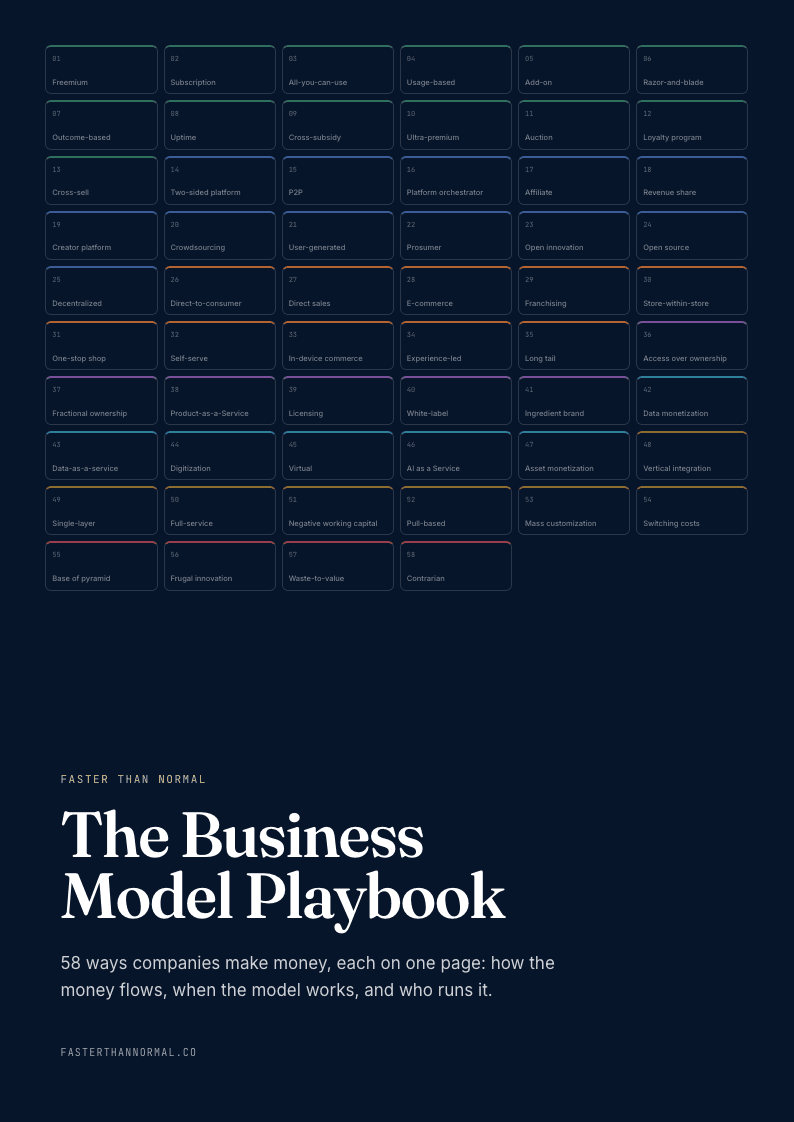
Get The Business Model Playbook
58 business models, one visual page each: how the money flows, the metrics that matter, and who runs it. Free when you join the Faster Than Normal email.
Free. No spam. Unsubscribe anytime.