

Contents
Book summary
Mindset: The New Psychology of Success
by Carol Dweck
The Core Premise
The difference between a struggling startup founder and a thriving one often isn't talent, resources, or market timing—it's how they interpret failure. Carol Dweck's groundbreaking research reveals that our beliefs about the nature of ability determine whether setbacks become catalysts for growth or reasons to quit. Her work on mindset theory exposes a fundamental divide: those who believe intelligence and talent are fixed traits versus those who see them as capabilities that develop through effort and learning.
Dweck identifies two core mindsets that shape every aspect of performance. The fixed mindset operates from the belief that abilities are static—you're either smart or you're not, either a natural leader or a follower. This creates a constant need to prove oneself, making people avoid challenges that might expose limitations. The growth mindset, by contrast, thrives on challenge and sees failure as information rather than identity. Dweck's studies with students showed that those praised for intelligence ("You're so smart!") became risk-averse and performance declined when facing difficult tasks, while those praised for effort ("You worked really hard!") sought out harder challenges and improved over time.
The implications extend far beyond education into business leadership and organizational culture. Dweck demonstrates how CEO mindset shapes entire companies through her analysis of leaders like Lou Gerstner at IBM versus Al Dunlap at Scott Paper. Gerstner exemplified growth mindset leadership—he acknowledged IBM's problems, invested heavily in employee development, and viewed the turnaround as a learning process. Dunlap represented fixed mindset thinking—he believed in natural talent hierarchies, focused on proving his superiority, and created cultures of fear where admitting mistakes was career suicide. The results spoke for themselves: IBM's sustainable transformation versus Scott Paper's short-term gains followed by long-term decline.
The book's most powerful insight concerns how mindset affects response to criticism and setbacks. Fixed mindset individuals interpret negative feedback as attacks on their identity, leading to defensiveness or withdrawal. Growth mindset leaders mine feedback for improvement opportunities and model vulnerability by admitting their own learning edges. This creates psychological safety where teams innovate freely because failure becomes data rather than judgment. Dweck's research on the "power of yet"—reframing "I can't do this" as "I can't do this yet"—provides a simple linguistic tool for shifting entire organizational cultures toward continuous learning.
For executives, Dweck's framework offers a diagnostic tool for evaluating talent and building resilient organizations. The key lies not in hiring people who never fail, but in identifying those who respond to failure with curiosity rather than defensiveness. Companies can implement growth mindset principles through hiring practices that test for learning agility, performance reviews that emphasize development over ranking, and leadership modeling that celebrates intelligent risks even when they don't pay off. The mindset lens transforms how leaders think about everything from strategic pivots to team development, making it an essential framework for navigating uncertainty and building adaptive capacity.
Mindset: The New Psychology of Success by Carol Dweck belongs on the short shelf of books that change how you notice decisions in the wild. Whether you agree with every claim or not, the frame it offers is portable: you can apply it in meetings, investing, hiring, and personal trade-offs without carrying the whole volume.
Many readers return to this book because it names patterns that felt familiar but unnamed. Naming is leverage: once you can point to a mechanism, you can design around it. One through-line is “Fixed vs. Growth Mindset: The fundamental distinction between believing abilities are static traits (fixed) versus capabilities that develop through effort and learning (growth). Fixed mindset creates” and its implications for judgment under uncertainty.
If you are reading for execution, translate each chapter into a testable habit: one prompt before a big decision, one review question after a project, one constraint you will respect next quarter. Theory becomes useful when it shows up in calendars, not only in margins.
Finally, pair this book with opposing voices. The strongest readers stress-test the thesis against cases where the advice fails, note the boundary conditions, and keep a short list of when not to use this lens. That discipline is how summaries become judgment.
Long-form books reward spaced attention: read a chapter, sleep, then write a half-page memo titled “What would I do differently on Monday?” If you cannot answer with specifics, the idea has not yet landed.
Use Mindset: The New Psychology of Success as a conversation starter with peers who have different incentives. The disagreements often reveal which parts of the book are robust and which are fragile when power, risk, and time horizons change.
Key Ideas and Arguments
Fixed vs. Growth Mindset: The fundamental distinction between believing abilities are static traits (fixed) versus capabilities that develop through effort and learning (growth). Fixed mindset creates need to constantly prove oneself, while growth mindset embraces challenges as learning opportunities.. This idea shows up repeatedly in Mindset: The New Psychology of Success: separate the definition from the examples, then ask where the author's evidence is strongest and where anecdotes do most of the work. Consider writing a counterexample: a situation where applying the idea literally would misfire, and what guardrail you would add.
Process vs. Person Praise: Praising effort, strategy, and improvement ("You worked hard on that problem") versus praising intelligence or talent ("You're so smart"). Process praise develops resilience and challenge-seeking behavior, while person praise creates risk aversion and performance anxiety.. This idea shows up repeatedly in Mindset: The New Psychology of Success: separate the definition from the examples, then ask where the author's evidence is strongest and where anecdotes do most of the work. Consider writing a counterexample: a situation where applying the idea literally would misfire, and what guardrail you would add.
The Power of Yet: Adding "yet" to statements of inability ("I can't do this yet" instead of "I can't do this") fundamentally shifts thinking from fixed limitation to temporary learning gap. This simple linguistic change activates growth mindset and maintains motivation during difficult learning.. This idea shows up repeatedly in Mindset: The New Psychology of Success: separate the definition from the examples, then ask where the author's evidence is strongest and where anecdotes do most of the work. Consider writing a counterexample: a situation where applying the idea literally would misfire, and what guardrail you would add.
Learning Goals vs. Performance Goals: Focusing on developing new skills and understanding versus demonstrating existing ability. Learning goals lead to persistence through difficulty and higher achievement, while performance goals create avoidance of challenging tasks.. This idea shows up repeatedly in Mindset: The New Psychology of Success: separate the definition from the examples, then ask where the author's evidence is strongest and where anecdotes do most of the work. Consider writing a counterexample: a situation where applying the idea literally would misfire, and what guardrail you would add.
Failure as Information vs. Identity: Growth mindset treats setbacks as data about what to improve rather than evidence of personal inadequacy. This enables rapid learning cycles and prevents the defensiveness that blocks development in fixed mindset individuals.. This idea shows up repeatedly in Mindset: The New Psychology of Success: separate the definition from the examples, then ask where the author's evidence is strongest and where anecdotes do most of the work. Consider writing a counterexample: a situation where applying the idea literally would misfire, and what guardrail you would add.
Mindset Contagion: How leader mindset shapes organizational culture through hiring, feedback systems, and response to failure. Growth mindset leaders create psychological safety that enables innovation, while fixed mindset leaders create fear-based cultures that stifle learning.. This idea shows up repeatedly in Mindset: The New Psychology of Success: separate the definition from the examples, then ask where the author's evidence is strongest and where anecdotes do most of the work. Consider writing a counterexample: a situation where applying the idea literally would misfire, and what guardrail you would add.
Deeper Themes and Context
Mindset: The New Psychology of Success is not only a catalogue of claims; it is a stance on how to interpret success, failure, and ambiguity. Readers who engage charitably still ask: which recommendations are universal, which are culturally situated, and which require institutional support you do not have?
Comparing the book's prescriptions to your own context is part of the work. A strategy that assumes abundant capital, patient stakeholders, or long feedback loops will read differently if you are resource-constrained, early in a career, or operating under regulatory pressure. Translation beats transcription.
The book also invites you to notice what it does not say. Silences can be instructive: topics the author avoids, counterexamples that never appear, or metrics that are praised without definition. A serious reader keeps a missing-evidence note alongside a to-try note.
Historically, the most influential business and biography titles survive because they double as vocabulary. Teams that share a phrase from Mindset: The New Psychology of Success move faster only when they also share a definition and a worked example, otherwise they talk past each other with the same words.
How to Apply the Lessons
Connected Mental Models
Who Should Read This
Start here if you want a serious, book-length argument rather than a thread of bullet points. Mindset: The New Psychology of Success rewards readers who will sketch their own examples, argue back in the margins, and connect chapters to decisions they are facing this quarter.
It is also useful as a shared vocabulary for teams: a common chapter reference can shorten debate if everyone agrees what the term means in practice. If your team only shares the title, not the definition, expect confusion.
Skip or skim if you need a narrow tactical recipe with no theory; this summary preserves the ideas, but the book's value is often in the extended case material and the author's sequencing.
Analyst's Take
Test Yourself
Check your grasp of the book’s moves
A colleague quotes Mindset: The New Psychology of Success to justify a risky decision. What should you verify first?
You finished Mindset: The New Psychology of Success and want behaviour change this week.
Further Reading
Featured in
Continue exploring


Free playbook
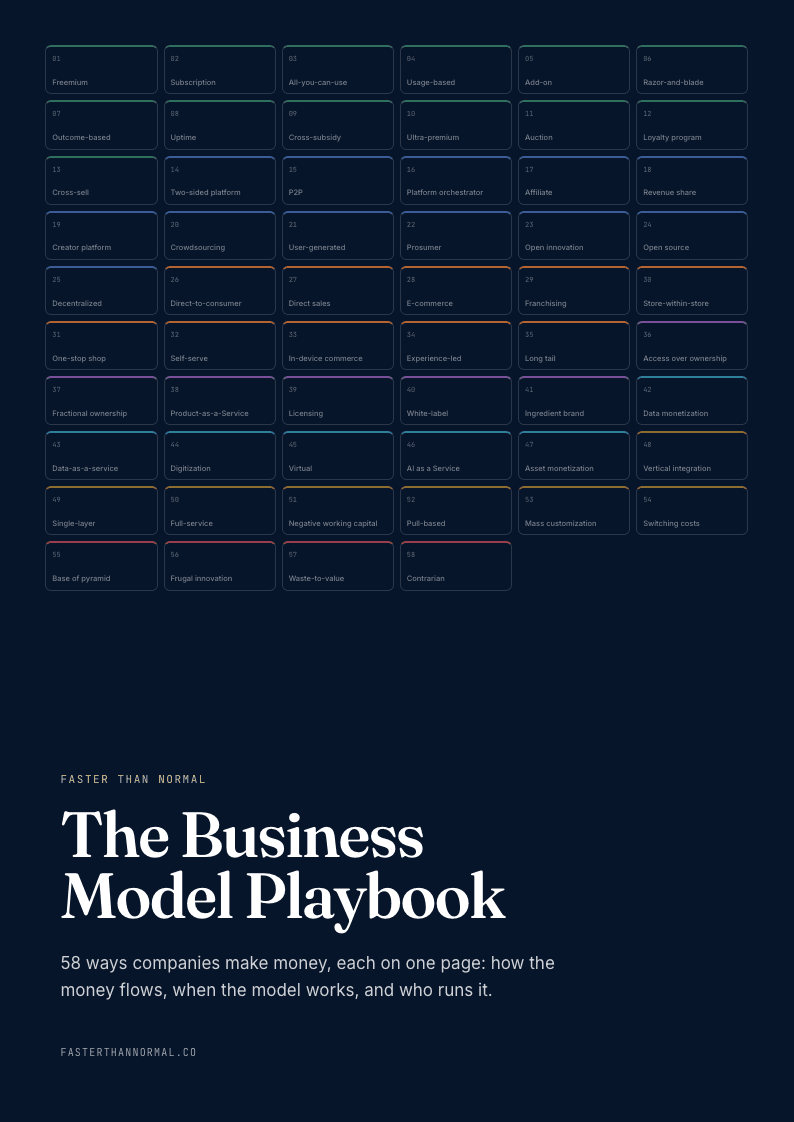
Get The Business Model Playbook
58 business models, one visual page each: how the money flows, the metrics that matter, and who runs it. Free when you join the Faster Than Normal email.
Free. No spam. Unsubscribe anytime.