

Contents
Book summary
Ludicrous: The Unvarnished Story of Tesla Motors
by Edward Niedermeyer
The Core Premise
Edward Niedermeyer demolishes the myth that Tesla succeeded by reinventing the automobile industry, revealing instead how Elon Musk built an empire on financial engineering, regulatory arbitrage, and masterful storytelling that consistently obscured operational dysfunction. The former automotive journalist spent years documenting Tesla's rise and exposes a company that survived not through superior technology or manufacturing excellence, but by exploiting electric vehicle subsidies, carbon credit sales, and capital markets willing to fund losses in exchange for growth narratives.
Niedermeyer's "regulatory capture thesis" forms the book's analytical backbone—Tesla didn't disrupt transportation so much as it gamed the system of government incentives designed to accelerate EV adoption. The company generated more revenue from selling regulatory credits to competitors than from actual profits on car sales for most of its existence. When traditional automakers like GM or Ford sold gas-guzzling trucks, they purchased Tesla's excess carbon credits to meet fleet emissions standards, essentially subsidizing their supposed disruptor. This symbiotic relationship allowed Tesla to report profits while burning cash on operations, creating what Niedermeyer calls the "profitability illusion."
The book's most damning evidence centers on Tesla's manufacturing hell and quality control disasters. Niedermeyer documents the Model 3 production ramp, where Musk's promise of highly automated manufacturing devolved into workers hand-assembling cars in a tent outside the Fremont factory. Internal emails reveal engineers warning about safety defects in Autopilot systems while marketing continued promoting "full self-driving" capabilities that didn't exist. The author contrasts this with Toyota's decades-perfecting lean manufacturing principles, showing how Tesla's "move fast and break things" software mentality nearly broke the company when applied to physical manufacturing.
Niedermeyer argues that Tesla's true innovation lay in "demand creation through aspiration"—selling customers not transportation, but identity and status wrapped in environmental virtue signaling. The company mastered what he terms "vaporware marketing," announcing revolutionary products years before they could be delivered, then using pre-orders to fund operations while maintaining media attention. The Cybertruck, Semi, and Roadster 2.0 all follow this pattern, generating headlines and deposits while actual delivery timelines slip indefinitely. For executives, Niedermeyer's analysis reveals how narrative control and strategic ambiguity can substitute for operational excellence, at least temporarily, but warns that physical-world businesses eventually face constraints that pure software companies can avoid.
With unique blend of original reporting and deep analysis, journalist Edward Niedermeyer reveals the ugly reality hidden behind Tesla's popular mythology and explains why Tesla is more likely to end up as a transitional figure in automotive history than the next industrial juggernaut.
Ludicrous: The Unvarnished Story of Tesla Motors by Edward Niedermeyer belongs on the short shelf of books that change how you notice decisions in the wild. Whether you agree with every claim or not, the frame it offers is portable: you can apply it in meetings, investing, hiring, and personal trade-offs without carrying the whole volume.
Many readers return to this book because it names patterns that felt familiar but unnamed. Naming is leverage: once you can point to a mechanism, you can design around it. One through-line is “Regulatory Arbitrage: Tesla's business model depended heavily on exploiting government incentives and selling carbon credits to traditional automakers rather than generating profits from vehicle sales” and its implications for judgment under uncertainty.
If you are reading for execution, translate each chapter into a testable habit: one prompt before a big decision, one review question after a project, one constraint you will respect next quarter. Theory becomes useful when it shows up in calendars, not only in margins.
Finally, pair this book with opposing voices. The strongest readers stress-test the thesis against cases where the advice fails, note the boundary conditions, and keep a short list of when not to use this lens. That discipline is how summaries become judgment.
Long-form books reward spaced attention: read a chapter, sleep, then write a half-page memo titled “What would I do differently on Monday?” If you cannot answer with specifics, the idea has not yet landed.
Use Ludicrous: The Unvarnished Story of Tesla Motors as a conversation starter with peers who have different incentives. The disagreements often reveal which parts of the book are robust and which are fragile when power, risk, and time horizons change.
Key Ideas and Arguments
Regulatory Arbitrage: Tesla's business model depended heavily on exploiting government incentives and selling carbon credits to traditional automakers rather than generating profits from vehicle sales. The company made more money from regulatory credit sales than operational profits for most of its history.. This idea shows up repeatedly in Ludicrous: The Unvarnished Story of Tesla Motors: separate the definition from the examples, then ask where the author's evidence is strongest and where anecdotes do most of the work. Consider writing a counterexample: a situation where applying the idea literally would misfire, and what guardrail you would add.
Manufacturing Hell: Musk's vision of highly automated production lines failed catastrophically during Model 3 ramp-up, forcing workers to hand-assemble vehicles in temporary structures. This exposed the gap between Tesla's software-inspired approach and the physical realities of manufacturing.. This idea shows up repeatedly in Ludicrous: The Unvarnished Story of Tesla Motors: separate the definition from the examples, then ask where the author's evidence is strongest and where anecdotes do most of the work. Consider writing a counterexample: a situation where applying the idea literally would misfire, and what guardrail you would add.
Vaporware Marketing: Tesla systematically announced revolutionary products years before they could be delivered, using pre-orders and media hype to fund operations and maintain stock prices. Products like the Cybertruck and Semi generated massive attention but faced indefinite delivery delays.. This idea shows up repeatedly in Ludicrous: The Unvarnished Story of Tesla Motors: separate the definition from the examples, then ask where the author's evidence is strongest and where anecdotes do most of the work. Consider writing a counterexample: a situation where applying the idea literally would misfire, and what guardrail you would add.
Profitability Illusion: Tesla reported profits by selling regulatory credits while burning cash on core operations, creating misleading financial statements that masked operational dysfunction. This allowed the company to maintain growth narratives despite persistent losses.. This idea shows up repeatedly in Ludicrous: The Unvarnished Story of Tesla Motors: separate the definition from the examples, then ask where the author's evidence is strongest and where anecdotes do most of the work. Consider writing a counterexample: a situation where applying the idea literally would misfire, and what guardrail you would add.
Demand Creation Through Aspiration: Tesla succeeded by selling identity and environmental virtue rather than mere transportation, creating customer loyalty that transcended traditional automotive metrics. Buyers tolerated quality issues and delays because they were purchasing status and values alignment.. This idea shows up repeatedly in Ludicrous: The Unvarnished Story of Tesla Motors: separate the definition from the examples, then ask where the author's evidence is strongest and where anecdotes do most of the work. Consider writing a counterexample: a situation where applying the idea literally would misfire, and what guardrail you would add.
Quality Control Disasters: Internal documents revealed systematic safety defects and engineering warnings ignored in favor of rushed timelines and marketing promises. Autopilot capabilities were oversold while actual self-driving technology remained years away from viability.. This idea shows up repeatedly in Ludicrous: The Unvarnished Story of Tesla Motors: separate the definition from the examples, then ask where the author's evidence is strongest and where anecdotes do most of the work. Consider writing a counterexample: a situation where applying the idea literally would misfire, and what guardrail you would add.
Deeper Themes and Context
Ludicrous: The Unvarnished Story of Tesla Motors is not only a catalogue of claims; it is a stance on how to interpret success, failure, and ambiguity. Readers who engage charitably still ask: which recommendations are universal, which are culturally situated, and which require institutional support you do not have?
Comparing the book's prescriptions to your own context is part of the work. A strategy that assumes abundant capital, patient stakeholders, or long feedback loops will read differently if you are resource-constrained, early in a career, or operating under regulatory pressure. Translation beats transcription.
The book also invites you to notice what it does not say. Silences can be instructive: topics the author avoids, counterexamples that never appear, or metrics that are praised without definition. A serious reader keeps a missing-evidence note alongside a to-try note.
Historically, the most influential business and biography titles survive because they double as vocabulary. Teams that share a phrase from Ludicrous: The Unvarnished Story of Tesla Motors move faster only when they also share a definition and a worked example, otherwise they talk past each other with the same words.
How to Apply the Lessons
Connected Mental Models
Who Should Read This
Start here if you want a serious, book-length argument rather than a thread of bullet points. Ludicrous: The Unvarnished Story of Tesla Motors rewards readers who will sketch their own examples, argue back in the margins, and connect chapters to decisions they are facing this quarter.
It is also useful as a shared vocabulary for teams: a common chapter reference can shorten debate if everyone agrees what the term means in practice. If your team only shares the title, not the definition, expect confusion.
Skip or skim if you need a narrow tactical recipe with no theory; this summary preserves the ideas, but the book's value is often in the extended case material and the author's sequencing.
Analyst's Take
Test Yourself
Check your grasp of the book’s moves
A colleague quotes Ludicrous: The Unvarnished Story of Tesla Motors to justify a risky decision. What should you verify first?
You finished Ludicrous: The Unvarnished Story of Tesla Motors and want behaviour change this week.
Further Reading
Continue exploring


Free playbook
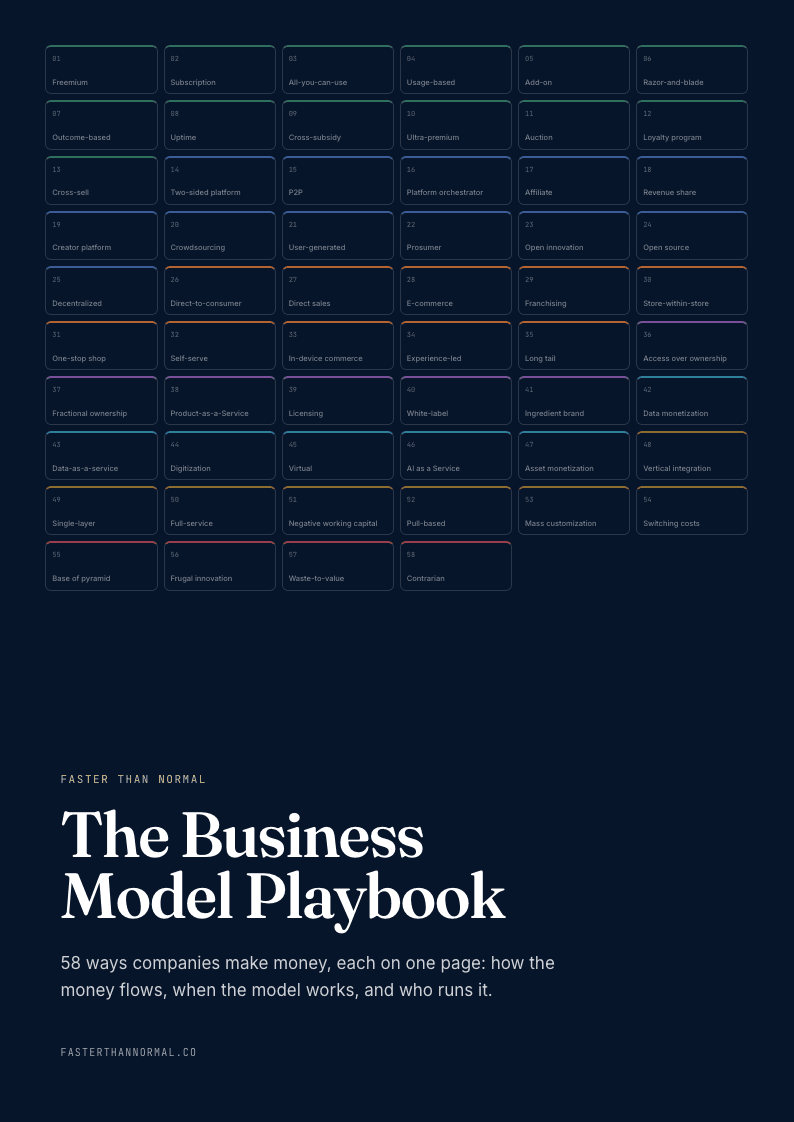
Get The Business Model Playbook
58 business models, one visual page each: how the money flows, the metrics that matter, and who runs it. Free when you join the Faster Than Normal email.
Free. No spam. Unsubscribe anytime.