

Contents
Book summary
Invention: A Life
by James Dyson
The Core Premise
James Dyson's memoir reveals the mechanics of systematic innovation through the lens of building a global design empire from a British farmhouse. His central thesis challenges the romanticized view of invention as sudden inspiration, instead demonstrating that breakthrough innovation emerges from obsessive iteration and a willingness to endure thousands of failures. Dyson's development of the dual cyclone vacuum—which took 5,127 prototypes over 15 years—exemplifies his philosophy that 'failure is interesting' because it reveals what doesn't work, narrowing the path to solutions. The book traces his evolution from art school graduate to engineer, showing how his outsider status in engineering became an advantage, allowing him to question fundamental assumptions that industry insiders accepted without examination. Dyson's 'wrong' approach of removing the bag from vacuum cleaners succeeded precisely because established manufacturers were trapped by their existing profit models selling replacement bags. His framework of 'questioning everything' extends beyond product design to business strategy, manufacturing, and company culture. The narrative demonstrates how Dyson's refusal to license his technology to existing manufacturers—despite years of rejection—ultimately enabled him to build a company that controlled its entire value chain. His insistence on locating research and development in high-cost Britain while manufacturing globally illustrates his belief that innovation requires proximity between designers and decision-makers. The book offers a practitioner's guide to building a culture where engineering rigor meets creative rebellion.
This thread continues the same argument: James Dyson's memoir reveals the mechanics of systematic innovation through the lens of building a global design empire from a British farmhouse. His central thesis challenges the romanticized view of…
This thread continues the same argument: James Dyson's memoir reveals the mechanics of systematic innovation through the lens of building a global design empire from a British farmhouse. His central thesis challenges the romanticized view of…
This thread continues the same argument: James Dyson's memoir reveals the mechanics of systematic innovation through the lens of building a global design empire from a British farmhouse. His central thesis challenges the romanticized view of…
Dyson has become a byword for high-performing products, technology, design, and invention. Now, James Dyson, the inventor and entrepreneur who made it all happen, tells his remarkable and inspirational story in Invention: A Life, “one of the year’s most relevant and revelatory business books” (The Wall Street Journal). Famously, over a four-year period, James Dyson made 5,127 prototypes of the cyclonic vacuum cleaner that would transform the way houses are cleaned around the world. In devoting all his resources to iteratively setbacks came hard-fought success. His products—including vacuum cleaners, hair dryer and hair stylers, and fans and purifiers—are not only revolutionary technologies, but design classics. This was a legacy of his time studying at the Royal College of Art in the 1960s, when he was inspired by some of the most famous artists, designers, and inventors of the era, as well as his engineering heroes such as Frank Whittle and Alex Issigonis. In Invention: A Life, Dyson reveals how he came to set up his own company and led it to become one of the most inventive technology companies in the world. It is a compelling and dramatic tale, with many obstacles overcome. Dyso…
Invention: A Life by James Dyson belongs on the short shelf of books that change how you notice decisions in the wild. Whether you agree with every claim or not, the frame it offers is portable: you can apply it in meetings, investing, hiring, and personal trade-offs without carrying the whole volume.
Many readers return to this book because it names patterns that felt familiar but unnamed. Naming is leverage: once you can point to a mechanism, you can design around it. One through-line is “Obsessive Iteration: True innovation requires thousands of prototypes and systematic testing rather than waiting for perfect solutions to emerge fully formed.” and its implications for judgment under uncertainty.
If you are reading for execution, translate each chapter into a testable habit: one prompt before a big decision, one review question after a project, one constraint you will respect next quarter. Theory becomes useful when it shows up in calendars, not only in margins.
Finally, pair this book with opposing voices. The strongest readers stress-test the thesis against cases where the advice fails, note the boundary conditions, and keep a short list of when not to use this lens. That discipline is how summaries become judgment.
Long-form books reward spaced attention: read a chapter, sleep, then write a half-page memo titled “What would I do differently on Monday?” If you cannot answer with specifics, the idea has not yet landed.
Use Invention: A Life as a conversation starter with peers who have different incentives. The disagreements often reveal which parts of the book are robust and which are fragile when power, risk, and time horizons change.
Key Ideas and Arguments
Obsessive Iteration: True innovation requires thousands of prototypes and systematic testing rather than waiting for perfect solutions to emerge fully formed.. This idea shows up repeatedly in Invention: A Life: separate the definition from the examples, then ask where the author's evidence is strongest and where anecdotes do most of the work. Consider writing a counterexample: a situation where applying the idea literally would misfire, and what guardrail you would add.
Productive Failure: Each failed prototype provides valuable data about what doesn't work, making failure an essential component of the innovation process rather than something to avoid.. This idea shows up repeatedly in Invention: A Life: separate the definition from the examples, then ask where the author's evidence is strongest and where anecdotes do most of the work. Consider writing a counterexample: a situation where applying the idea literally would misfire, and what guardrail you would add.
Outsider Advantage: Being new to an industry can be beneficial because outsiders aren't constrained by existing assumptions and accepted limitations.. This idea shows up repeatedly in Invention: A Life: separate the definition from the examples, then ask where the author's evidence is strongest and where anecdotes do most of the work. Consider writing a counterexample: a situation where applying the idea literally would misfire, and what guardrail you would add.
Value Chain Control: Maintaining ownership of the entire process from design to manufacturing enables better quality control and higher profit margins than licensing technology to others.. This idea shows up repeatedly in Invention: A Life: separate the definition from the examples, then ask where the author's evidence is strongest and where anecdotes do most of the work. Consider writing a counterexample: a situation where applying the idea literally would misfire, and what guardrail you would add.
Questioning Fundamentals: Innovation often comes from challenging basic assumptions that everyone in an industry takes for granted, like whether vacuum cleaners need bags.. This idea shows up repeatedly in Invention: A Life: separate the definition from the examples, then ask where the author's evidence is strongest and where anecdotes do most of the work. Consider writing a counterexample: a situation where applying the idea literally would misfire, and what guardrail you would add.
Research Proximity: Keeping research and development close to company leadership enables faster decision-making and better integration of innovation with business strategy.. This idea shows up repeatedly in Invention: A Life: separate the definition from the examples, then ask where the author's evidence is strongest and where anecdotes do most of the work. Consider writing a counterexample: a situation where applying the idea literally would misfire, and what guardrail you would add.
Long-term Thinking: Building breakthrough products requires accepting years of investment without immediate returns, which demands patient capital and unwavering conviction.. This idea shows up repeatedly in Invention: A Life: separate the definition from the examples, then ask where the author's evidence is strongest and where anecdotes do most of the work. Consider writing a counterexample: a situation where applying the idea literally would misfire, and what guardrail you would add.
Deeper Themes and Context
Invention: A Life is not only a catalogue of claims; it is a stance on how to interpret success, failure, and ambiguity. Readers who engage charitably still ask: which recommendations are universal, which are culturally situated, and which require institutional support you do not have?
Comparing the book's prescriptions to your own context is part of the work. A strategy that assumes abundant capital, patient stakeholders, or long feedback loops will read differently if you are resource-constrained, early in a career, or operating under regulatory pressure. Translation beats transcription.
The book also invites you to notice what it does not say. Silences can be instructive: topics the author avoids, counterexamples that never appear, or metrics that are praised without definition. A serious reader keeps a missing-evidence note alongside a to-try note.
Historically, the most influential business and biography titles survive because they double as vocabulary. Teams that share a phrase from Invention: A Life move faster only when they also share a definition and a worked example, otherwise they talk past each other with the same words.
How to Apply the Lessons
Connected Mental Models
Who Should Read This
Start here if you want a serious, book-length argument rather than a thread of bullet points. Invention: A Life rewards readers who will sketch their own examples, argue back in the margins, and connect chapters to decisions they are facing this quarter.
It is also useful as a shared vocabulary for teams: a common chapter reference can shorten debate if everyone agrees what the term means in practice. If your team only shares the title, not the definition, expect confusion.
Skip or skim if you need a narrow tactical recipe with no theory; this summary preserves the ideas, but the book's value is often in the extended case material and the author's sequencing.
Analyst's Take
Test Yourself
Check your grasp of the book’s moves
A colleague quotes Invention: A Life to justify a risky decision. What should you verify first?
You finished Invention: A Life and want behaviour change this week.
Further Reading
Continue exploring


Free playbook
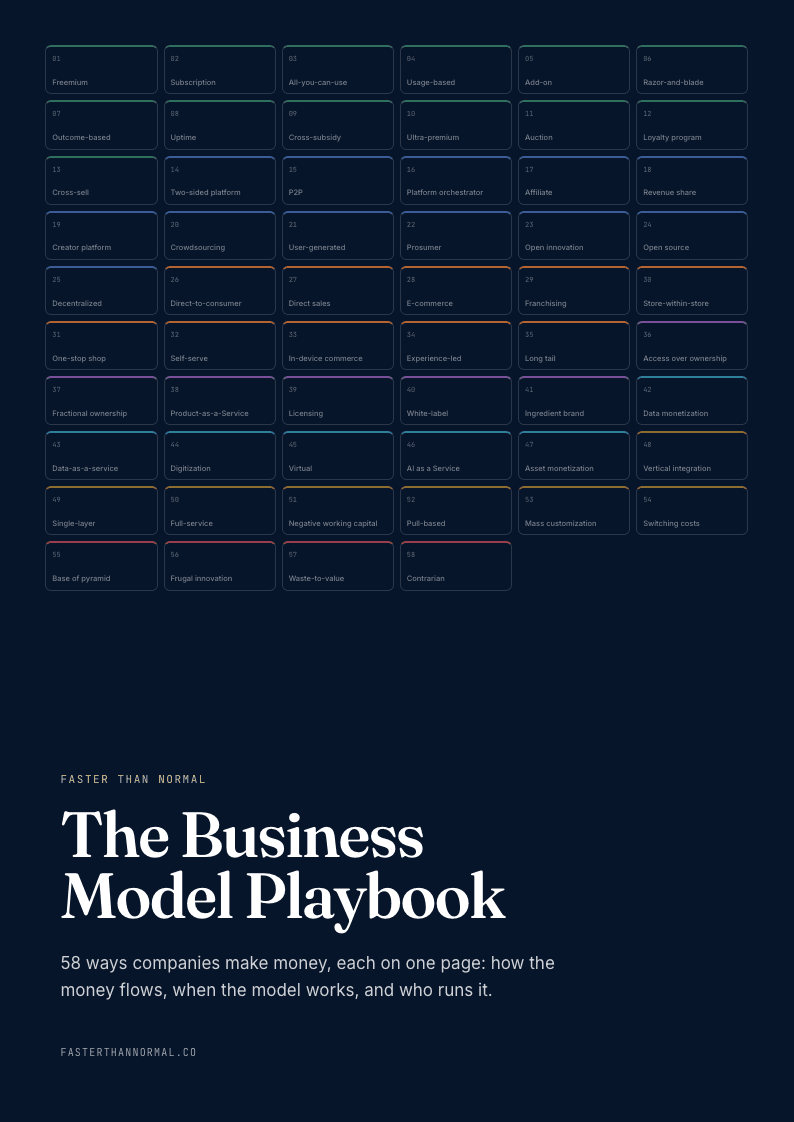
Get The Business Model Playbook
58 business models, one visual page each: how the money flows, the metrics that matter, and who runs it. Free when you join the Faster Than Normal email.
Free. No spam. Unsubscribe anytime.