

Contents
Book summary
How to Win Friends and Influence People
by Dale Carnegie
The Core Premise
Dale Carnegie discovered something remarkable while teaching public speaking in New York: the same executives who commanded boardrooms often failed miserably in everyday human interactions, sabotaging their own success through unnecessary conflicts and missed opportunities. His systematic study of human nature revealed that most people approach relationships backwards—focusing on what they want to say rather than what others need to hear, criticizing instead of encouraging, and demanding rather than inspiring.
Carnegie's framework centers on what he calls the "fundamental techniques" of influence, organized into four core principles that run counter to most executive instincts. His "Don't Criticize, Don't Condemn, Don't Complain" rule challenges the typical management approach of pointing out flaws. Instead, Carnegie advocates for his "Law of Sincere Appreciation"—finding genuine reasons to praise others' efforts. When Charles Schwab was running Bethlehem Steel, he encountered a group of workers smoking in a no-smoking area. Rather than reprimanding them, Schwab handed each man a cigar and said, "I'd appreciate it if you'd smoke these outside." The workers never violated the rule again. This illustrates Carnegie's central thesis: people respond to respect and recognition, not criticism and commands.
The book's most powerful framework is Carnegie's "Six Ways to Make People Like You," which includes becoming genuinely interested in others, smiling, remembering names, listening more than talking, discussing others' interests, and making them feel important. He demonstrates this through the case of Jim Farley, who became Roosevelt's campaign manager by remembering the names of 50,000 people across America. Farley's systematic approach—writing down personal details after every conversation and reviewing them before subsequent meetings—helped him build the political network that secured Roosevelt's presidency. Carnegie proves that such techniques aren't manipulation but genuine relationship-building when applied with sincere intent.
For founders and executives, Carnegie's "Twelve Ways to Win People to Your Way of Thinking" provides a roadmap for persuasion without coercion. His "Yes-Yes Technique" involves asking questions that generate agreement before presenting your main request. When Benjamin Franklin wanted to win over a hostile legislator, he didn't argue or cajole—instead, he asked to borrow a rare book from the man's library. This small favor created psychological consistency; the legislator reasoned that he must like Franklin, otherwise why would he lend him something valuable? The relationship transformed, and Franklin gained a lifelong ally. This exemplifies Carnegie's insight that people convince themselves more effectively than others can convince them.
Carnegie's enduring relevance lies in his recognition that business success depends less on technical competence than on the ability to work through others. His frameworks provide systematic approaches to the human dynamics that determine whether strategies succeed or fail, whether teams execute effectively, and whether stakeholders support or resist change. The executive who masters Carnegie's techniques can transform organizational culture, accelerate decision-making, and build the coalition necessary for sustained success.
How to Win Friends and Influence People by Dale Carnegie belongs on the short shelf of books that change how you notice decisions in the wild. Whether you agree with every claim or not, the frame it offers is portable: you can apply it in meetings, investing, hiring, and personal trade-offs without carrying the whole volume.
Many readers return to this book because it names patterns that felt familiar but unnamed. Naming is leverage: once you can point to a mechanism, you can design around it. One through-line is “Fundamental Techniques in Handling People: Carnegie's three-part foundation includes never criticizing, giving sincere appreciation, and arousing enthusiasm in others. He argues that criticism trigger” and its implications for judgment under uncertainty.
If you are reading for execution, translate each chapter into a testable habit: one prompt before a big decision, one review question after a project, one constraint you will respect next quarter. Theory becomes useful when it shows up in calendars, not only in margins.
Finally, pair this book with opposing voices. The strongest readers stress-test the thesis against cases where the advice fails, note the boundary conditions, and keep a short list of when not to use this lens. That discipline is how summaries become judgment.
Long-form books reward spaced attention: read a chapter, sleep, then write a half-page memo titled “What would I do differently on Monday?” If you cannot answer with specifics, the idea has not yet landed.
Use How to Win Friends and Influence People as a conversation starter with peers who have different incentives. The disagreements often reveal which parts of the book are robust and which are fragile when power, risk, and time horizons change.
Key Ideas and Arguments
Fundamental Techniques in Handling People: Carnegie's three-part foundation includes never criticizing, giving sincere appreciation, and arousing enthusiasm in others. He argues that criticism triggers defensiveness and resistance, while appreciation motivates people to maintain and exceed their performance levels.. This idea shows up repeatedly in How to Win Friends and Influence People: separate the definition from the examples, then ask where the author's evidence is strongest and where anecdotes do most of the work. Consider writing a counterexample: a situation where applying the idea literally would misfire, and what guardrail you would add.
Law of Sincere Appreciation: Distinguished from flattery, this principle requires finding genuine reasons to value others' contributions. Carnegie shows that people crave appreciation more than almost anything else, making it a powerful tool for building loyalty and motivation.. This idea shows up repeatedly in How to Win Friends and Influence People: separate the definition from the examples, then ask where the author's evidence is strongest and where anecdotes do most of the work. Consider writing a counterexample: a situation where applying the idea literally would misfire, and what guardrail you would add.
Yes-Yes Technique: A persuasion method where you ask questions that generate small agreements before presenting your main request. By establishing a pattern of agreement, you create psychological momentum that makes people more likely to say yes to larger requests.. This idea shows up repeatedly in How to Win Friends and Influence People: separate the definition from the examples, then ask where the author's evidence is strongest and where anecdotes do most of the work. Consider writing a counterexample: a situation where applying the idea literally would misfire, and what guardrail you would add.
Win People to Your Way of Thinking: Carnegie's twelve-step framework for persuasion without coercion, including letting others feel an idea is theirs, admitting when you're wrong, and appealing to noble motives rather than self-interest.. This idea shows up repeatedly in How to Win Friends and Influence People: separate the definition from the examples, then ask where the author's evidence is strongest and where anecdotes do most of the work. Consider writing a counterexample: a situation where applying the idea literally would misfire, and what guardrail you would add.
Make Others Feel Important: Carnegie identifies the desire for importance as a fundamental human drive. Leaders who satisfy this need through recognition, consultation, and respect create stronger relationships and higher performance.. This idea shows up repeatedly in How to Win Friends and Influence People: separate the definition from the examples, then ask where the author's evidence is strongest and where anecdotes do most of the work. Consider writing a counterexample: a situation where applying the idea literally would misfire, and what guardrail you would add.
Principle of Sympathetic Understanding: Rather than judging others' actions, Carnegie advocates understanding their motivations and perspectives. This emotional intelligence enables more effective communication and conflict resolution.. This idea shows up repeatedly in How to Win Friends and Influence People: separate the definition from the examples, then ask where the author's evidence is strongest and where anecdotes do most of the work. Consider writing a counterexample: a situation where applying the idea literally would misfire, and what guardrail you would add.
Deeper Themes and Context
How to Win Friends and Influence People is not only a catalogue of claims; it is a stance on how to interpret success, failure, and ambiguity. Readers who engage charitably still ask: which recommendations are universal, which are culturally situated, and which require institutional support you do not have?
Comparing the book's prescriptions to your own context is part of the work. A strategy that assumes abundant capital, patient stakeholders, or long feedback loops will read differently if you are resource-constrained, early in a career, or operating under regulatory pressure. Translation beats transcription.
The book also invites you to notice what it does not say. Silences can be instructive: topics the author avoids, counterexamples that never appear, or metrics that are praised without definition. A serious reader keeps a missing-evidence note alongside a to-try note.
Historically, the most influential business and biography titles survive because they double as vocabulary. Teams that share a phrase from How to Win Friends and Influence People move faster only when they also share a definition and a worked example, otherwise they talk past each other with the same words.
How to Apply the Lessons
Connected Mental Models
Who Should Read This
Start here if you want a serious, book-length argument rather than a thread of bullet points. How to Win Friends and Influence People rewards readers who will sketch their own examples, argue back in the margins, and connect chapters to decisions they are facing this quarter.
It is also useful as a shared vocabulary for teams: a common chapter reference can shorten debate if everyone agrees what the term means in practice. If your team only shares the title, not the definition, expect confusion.
Skip or skim if you need a narrow tactical recipe with no theory; this summary preserves the ideas, but the book's value is often in the extended case material and the author's sequencing.
Analyst's Take
Test Yourself
Check your grasp of the book’s moves
A colleague quotes How to Win Friends and Influence People to justify a risky decision. What should you verify first?
You finished How to Win Friends and Influence People and want behaviour change this week.
Further Reading
Featured in
Continue exploring


Free playbook
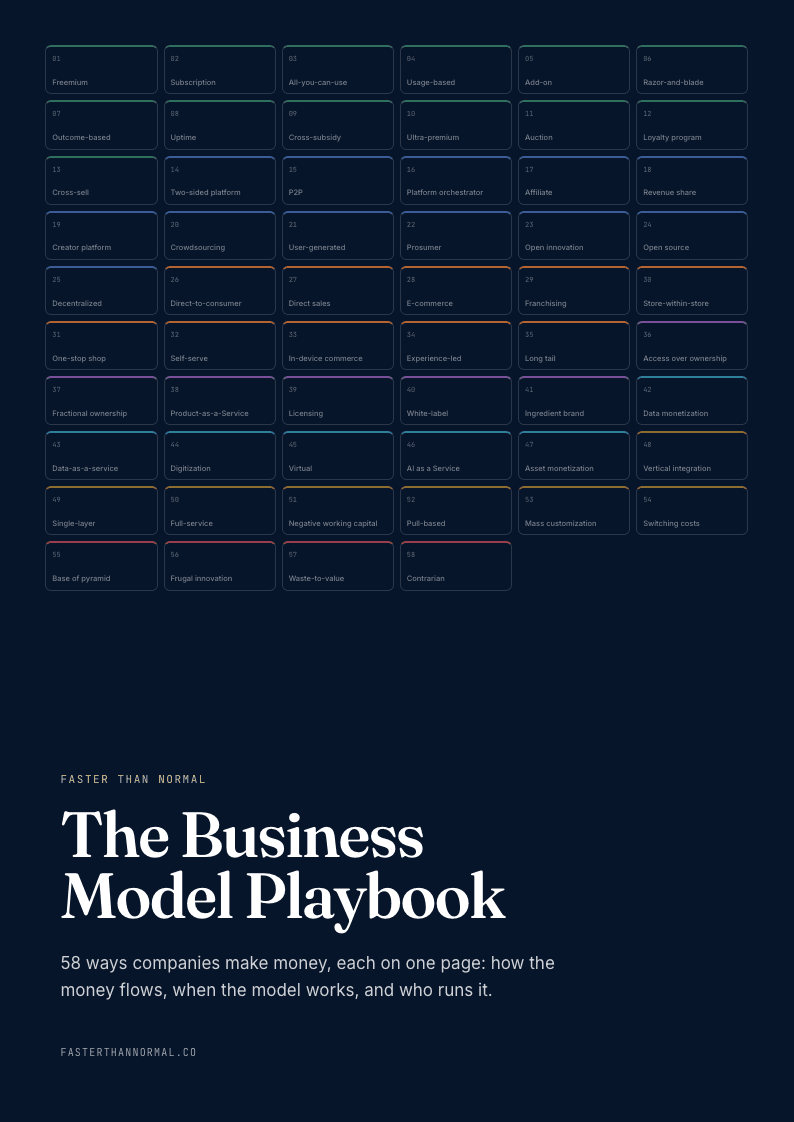
Get The Business Model Playbook
58 business models, one visual page each: how the money flows, the metrics that matter, and who runs it. Free when you join the Faster Than Normal email.
Free. No spam. Unsubscribe anytime.