

Contents
Book summary
Hard Drive: Bill Gates and the Making of the Microsoft Empire
by James Wallace and Jim Erickson
The Core Premise
Bill Gates succeeded not despite being ruthless, but because he understood that in winner-take-all technology markets, paranoia and aggression aren't character flaws—they're survival mechanisms. Wallace and Erickson's exhaustive investigation reveals how Microsoft's dominance emerged from Gates's unique ability to weaponize both technical insight and cutthroat business tactics, creating what they term the "Microsoft Method"—a systematic approach to identifying, copying, and crushing competitors through superior execution and relentless market positioning.
The book demolishes the myth of the garage-to-greatness narrative by exposing Gates's calculated moves from Microsoft's earliest days. When Ed Roberts created the Altair computer, Gates didn't just write a BASIC interpreter—he negotiated licensing terms that allowed Microsoft to sell the same software to other manufacturers, while Roberts remained locked into hardware. This "platform thinking" became Gates's signature strategy: create software that hardware makers needed, then use that dependency to extract maximum value. The authors detail how Gates applied this same logic to DOS, convincing IBM to let Microsoft retain licensing rights while IBM focused on hardware margins they considered more important. Gates understood that software scales infinitely while hardware faces manufacturing constraints.
Wallace and Erickson document Gates's "embrace, extend, extinguish" philosophy through Microsoft's systematic destruction of competitors. When Lotus dominated spreadsheets, Microsoft didn't just build Excel—they bundled it with Word and PowerPoint in Office, forcing customers to buy the suite rather than individual applications. The authors reveal internal memos showing how Microsoft deliberately made competing products incompatible with Windows updates, used advance knowledge of operating system changes to gain competitive advantages, and leveraged their platform control to starve rivals of market oxygen. Netscape's Navigator browser controlled 90% of the market until Microsoft bundled Internet Explorer with Windows, making their browser free and ubiquitous overnight.
The Microsoft Method extends beyond product strategy to talent acquisition and organizational design. Gates created what the authors call "productive paranoia"—a culture where employees constantly anticipated competitive threats and responded with overwhelming force. Microsoft's hiring process focused on raw intelligence over experience, deliberately recruiting brilliant generalists who could rapidly master new domains. The company's stack ranking system forced employees to compete internally, creating what Gates believed was necessary preparation for external market battles. This internal competition generated the intellectual firepower that allowed Microsoft to simultaneously fight wars across operating systems, applications, and emerging internet technologies.
For modern executives, Gates's approach offers a blueprint for building durable competitive advantages in platform-driven markets. His success came from recognizing that technology markets reward companies that control essential infrastructure, not necessarily those with the best individual products. The book demonstrates how Gates consistently chose strategic positioning over short-term optimization, accepting lower margins on DOS to establish market dominance, then leveraging that position to extract higher margins from applications. Today's founders face similar platform dynamics—the question isn't whether to play Gates's game, but whether they have the stomach and strategic clarity to execute it as effectively as he did.
The true story behind the rise of a tyrannical genius, how he transformed an industry, and why everyone is out to get him.In this fascinating expos , two investigative reporters trace the hugely successful career of Microsoft founder Bill Gates. Part entrepreneur, part enfant terrible, Gates has become the most powerful -- and feared -- player in the computer industry, and arguably the richest man in America. In Hard Drive, investigative reporters Wallace and Erickson follow Gates from his days as an unkempt thirteen-year-old computer hacker to his present-day status as a ruthless billionaire CEO. More than simply a "revenge of the nerds" story though, this is a balanced analysis of a business triumph, and a stunningly driven personality. The authors have spoken to everyone who knows anything about Bill Gates and Microsoft -- from childhood friends to employees and business rivals who reveal the heights, and limits, of his wizardry. From Gates's singular accomplishments to his equally extraordinary brattiness, arrogance, and hostility (the atmosphere is so intense at Microsoft that stressed-out programmers have been known to ease the tension of their eighty-hour workweeks by explod…
Hard Drive: Bill Gates and the Making of the Microsoft Empire by James Wallace and Jim Erickson belongs on the short shelf of books that change how you notice decisions in the wild. Whether you agree with every claim or not, the frame it offers is portable: you can apply it in meetings, investing, hiring, and personal trade-offs without carrying the whole volume.
Many readers return to this book because it names patterns that felt familiar but unnamed. Naming is leverage: once you can point to a mechanism, you can design around it. One through-line is “The Microsoft Method: Gates's systematic approach combining technical excellence with aggressive business tactics. Rather than competing on individual product merits, Microsoft identified strategic ch” and its implications for judgment under uncertainty.
If you are reading for execution, translate each chapter into a testable habit: one prompt before a big decision, one review question after a project, one constraint you will respect next quarter. Theory becomes useful when it shows up in calendars, not only in margins.
Finally, pair this book with opposing voices. The strongest readers stress-test the thesis against cases where the advice fails, note the boundary conditions, and keep a short list of when not to use this lens. That discipline is how summaries become judgment.
Long-form books reward spaced attention: read a chapter, sleep, then write a half-page memo titled “What would I do differently on Monday?” If you cannot answer with specifics, the idea has not yet landed.
Use Hard Drive: Bill Gates and the Making of the Microsoft Empire as a conversation starter with peers who have different incentives. The disagreements often reveal which parts of the book are robust and which are fragile when power, risk, and time horizons change.
Key Ideas and Arguments
The Microsoft Method: Gates's systematic approach combining technical excellence with aggressive business tactics. Rather than competing on individual product merits, Microsoft identified strategic chokepoints in the technology stack and used superior execution to control them.. This idea shows up repeatedly in Hard Drive: Bill Gates and the Making of the Microsoft Empire: separate the definition from the examples, then ask where the author's evidence is strongest and where anecdotes do most of the work. Consider writing a counterexample: a situation where applying the idea literally would misfire, and what guardrail you would add.
Platform Thinking: Gates's recognition that controlling underlying infrastructure matters more than having the best individual applications. He consistently chose positions that made other companies dependent on Microsoft's technology.. This idea shows up repeatedly in Hard Drive: Bill Gates and the Making of the Microsoft Empire: separate the definition from the examples, then ask where the author's evidence is strongest and where anecdotes do most of the work. Consider writing a counterexample: a situation where applying the idea literally would misfire, and what guardrail you would add.
Embrace, Extend, Extinguish: Microsoft's three-phase strategy for handling competitive threats. First adopt industry standards, then add proprietary extensions that created vendor lock-in, finally use that control to eliminate competitors.. This idea shows up repeatedly in Hard Drive: Bill Gates and the Making of the Microsoft Empire: separate the definition from the examples, then ask where the author's evidence is strongest and where anecdotes do most of the work. Consider writing a counterexample: a situation where applying the idea literally would misfire, and what guardrail you would add.
Productive Paranoia: The organizational culture Gates created where constant fear of competitive threats drove relentless innovation and market aggression. Employees were rewarded for identifying and neutralizing potential competitive advantages before they materialized.. This idea shows up repeatedly in Hard Drive: Bill Gates and the Making of the Microsoft Empire: separate the definition from the examples, then ask where the author's evidence is strongest and where anecdotes do most of the work. Consider writing a counterexample: a situation where applying the idea literally would misfire, and what guardrail you would add.
Bundling Strategy: Microsoft's approach of combining multiple products into integrated suites that forced customers to buy entire ecosystems rather than individual tools. This prevented competitors from succeeding even with superior point solutions.. This idea shows up repeatedly in Hard Drive: Bill Gates and the Making of the Microsoft Empire: separate the definition from the examples, then ask where the author's evidence is strongest and where anecdotes do most of the work. Consider writing a counterexample: a situation where applying the idea literally would misfire, and what guardrail you would add.
Information Asymmetry Exploitation: Gates's use of Microsoft's platform position to gain advance knowledge of market developments, then leveraging that information to build competitive advantages that appeared fair but were systematically unfair.. This idea shows up repeatedly in Hard Drive: Bill Gates and the Making of the Microsoft Empire: separate the definition from the examples, then ask where the author's evidence is strongest and where anecdotes do most of the work. Consider writing a counterexample: a situation where applying the idea literally would misfire, and what guardrail you would add.
Deeper Themes and Context
Hard Drive: Bill Gates and the Making of the Microsoft Empire is not only a catalogue of claims; it is a stance on how to interpret success, failure, and ambiguity. Readers who engage charitably still ask: which recommendations are universal, which are culturally situated, and which require institutional support you do not have?
Comparing the book's prescriptions to your own context is part of the work. A strategy that assumes abundant capital, patient stakeholders, or long feedback loops will read differently if you are resource-constrained, early in a career, or operating under regulatory pressure. Translation beats transcription.
The book also invites you to notice what it does not say. Silences can be instructive: topics the author avoids, counterexamples that never appear, or metrics that are praised without definition. A serious reader keeps a missing-evidence note alongside a to-try note.
Historically, the most influential business and biography titles survive because they double as vocabulary. Teams that share a phrase from Hard Drive: Bill Gates and the Making of the Microsoft Empire move faster only when they also share a definition and a worked example, otherwise they talk past each other with the same words.
How to Apply the Lessons
Connected Mental Models
Who Should Read This
Start here if you want a serious, book-length argument rather than a thread of bullet points. Hard Drive: Bill Gates and the Making of the Microsoft Empire rewards readers who will sketch their own examples, argue back in the margins, and connect chapters to decisions they are facing this quarter.
It is also useful as a shared vocabulary for teams: a common chapter reference can shorten debate if everyone agrees what the term means in practice. If your team only shares the title, not the definition, expect confusion.
Skip or skim if you need a narrow tactical recipe with no theory; this summary preserves the ideas, but the book's value is often in the extended case material and the author's sequencing.
Analyst's Take
Test Yourself
Check your grasp of the book’s moves
A colleague quotes Hard Drive: Bill Gates and the Making of the Microsoft Empire to justify a risky decision. What should you verify first?
You finished Hard Drive: Bill Gates and the Making of the Microsoft Empire and want behaviour change this week.
Further Reading
Continue exploring


Free playbook
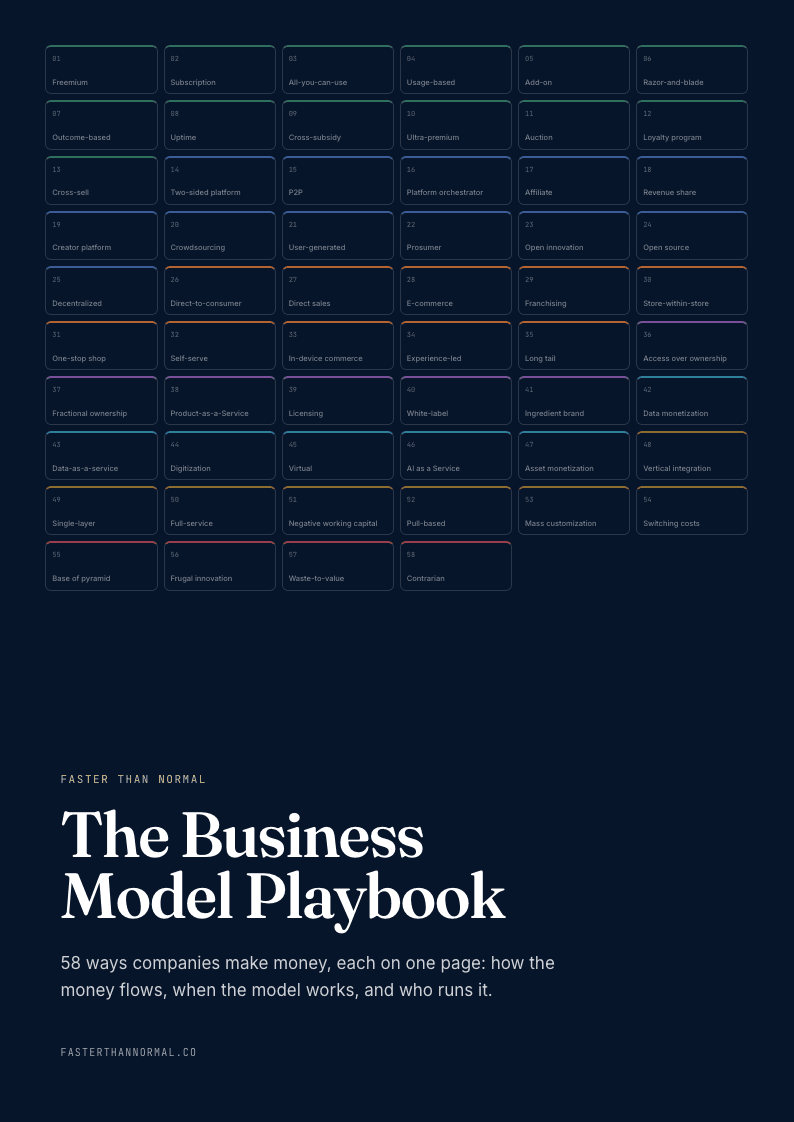
Get The Business Model Playbook
58 business models, one visual page each: how the money flows, the metrics that matter, and who runs it. Free when you join the Faster Than Normal email.
Free. No spam. Unsubscribe anytime.