

Contents
Book summary
Barnum
by Robert Wilson
The Core Premise
P.T. Barnum created the template for modern mass entertainment by mastering what Robert Wilson calls the "Democracy of Wonder" — the radical idea that spectacular experiences should be accessible to everyone, not just aristocrats. Wilson's biography reveals how Barnum transformed from a small-town Connecticut hustler into America's first entertainment mogul by understanding a fundamental truth: people crave authentic emotion, even when they suspect they're being fooled.
Barnum's genius lay in what Wilson terms "Humbug with Honor" — a philosophy of ethical deception that gave audiences exactly what they wanted while being surprisingly transparent about his methods. When Barnum exhibited Joice Heth, claiming she was George Washington's 161-year-old nurse, he simultaneously promoted her story and encouraged public debate about whether she was real. The controversy itself became the entertainment. Barnum wasn't just selling tickets to see Heth; he was selling participation in a national conversation about truth, spectacle, and belief. Wilson demonstrates how this model — manufacturing controversy while maintaining plausible authenticity — became the foundation for modern media, from reality television to social media influencers.
The American Museum, Barnum's Manhattan headquarters from 1841 to 1865, exemplified his "Operational Aesthetic" — Wilson's term for Barnum's ability to make the business of entertainment visible and exciting. Visitors didn't just see curiosities; they witnessed Barnum's showmanship in action. When the museum caught fire in 1865, crowds gathered not just to gawk at the disaster but to see how Barnum would respond. He treated even catastrophe as performance, immediately announcing plans to rebuild while the ashes were still smoking. This transparency about his methods, rather than undermining his mystique, enhanced it.
Wilson argues that Barnum pioneered three principles that define modern experience design: the "Escalation Imperative" (each attraction must exceed audience expectations), "Democratic Luxury" (making premium experiences feel accessible), and "Meta-Entertainment" (making the audience complicit in their own deception). When Barnum brought Jenny Lind to America, he didn't just promote her singing — he created a cultural phenomenon around the act of appreciating her singing. Audiences felt sophisticated for recognizing her talent, while Barnum earned both ticket revenue and cultural capital.
For executives building modern brands, Barnum's methods translate directly into what Wilson calls "Authentic Artifice" — being genuine about your constructed experiences. Barnum succeeded because he never pretended his shows weren't shows. He celebrated their artificial nature while delivering real emotional value. Leaders who master this balance — creating experiences that feel both crafted and authentic — tap into the same psychological mechanisms Barnum exploited: people's simultaneous desire to be surprised and to feel clever about understanding how they're being surprised.
P. T. Barnum was the greatest showman the world has ever seen. Nearly 125 years after his death, the name P. T. Barnum still inspires wonder. Phineas Taylor Barnum repeatedly reinvented himself. He learned how to wow crowds and built a fortune that placed him among the first millionaires in the United States. He also suffered tragedy, bankruptcy, and fires that destroyed his life's work, yet willed himself to rebuild and succeed again. Robert Wilson makes the case for P. T. Barnum's place among the icons of American history, as a figure who represented a sense of optimism, industriousness, humor, and relentless energy.
Barnum by Robert Wilson belongs on the short shelf of books that change how you notice decisions in the wild. Whether you agree with every claim or not, the frame it offers is portable: you can apply it in meetings, investing, hiring, and personal trade-offs without carrying the whole volume.
Many readers return to this book because it names patterns that felt familiar but unnamed. Naming is leverage: once you can point to a mechanism, you can design around it. One through-line is “Democracy of Wonder: Barnum's revolutionary approach to making spectacular entertainment accessible to all social classes, not just elites. He created experiences that felt luxurious and exclusive whi” and its implications for judgment under uncertainty.
If you are reading for execution, translate each chapter into a testable habit: one prompt before a big decision, one review question after a project, one constraint you will respect next quarter. Theory becomes useful when it shows up in calendars, not only in margins.
Finally, pair this book with opposing voices. The strongest readers stress-test the thesis against cases where the advice fails, note the boundary conditions, and keep a short list of when not to use this lens. That discipline is how summaries become judgment.
Long-form books reward spaced attention: read a chapter, sleep, then write a half-page memo titled “What would I do differently on Monday?” If you cannot answer with specifics, the idea has not yet landed.
Use Barnum as a conversation starter with peers who have different incentives. The disagreements often reveal which parts of the book are robust and which are fragile when power, risk, and time horizons change.
Key Ideas and Arguments
Democracy of Wonder: Barnum's revolutionary approach to making spectacular entertainment accessible to all social classes, not just elites. He created experiences that felt luxurious and exclusive while remaining affordable, establishing the template for mass entertainment that persists today.. This idea shows up repeatedly in Barnum: separate the definition from the examples, then ask where the author's evidence is strongest and where anecdotes do most of the work. Consider writing a counterexample: a situation where applying the idea literally would misfire, and what guardrail you would add.
Humbug with Honor: Barnum's ethical framework for deception that gave audiences permission to enjoy being fooled. He maintained plausible authenticity while encouraging skepticism, making the debate about truth part of the entertainment value itself.. This idea shows up repeatedly in Barnum: separate the definition from the examples, then ask where the author's evidence is strongest and where anecdotes do most of the work. Consider writing a counterexample: a situation where applying the idea literally would misfire, and what guardrail you would add.
Operational Aesthetic: The practice of making the business machinery of entertainment visible and exciting to audiences. Barnum let people see behind the curtain because the curtain-pulling itself was part of the show, creating transparency that enhanced rather than diminished mystique.. This idea shows up repeatedly in Barnum: separate the definition from the examples, then ask where the author's evidence is strongest and where anecdotes do most of the work. Consider writing a counterexample: a situation where applying the idea literally would misfire, and what guardrail you would add.
Escalation Imperative: Barnum's principle that each new attraction must exceed audience expectations set by the previous one. This created an arms race of spectacle that drove continuous innovation in entertainment and audience engagement.. This idea shows up repeatedly in Barnum: separate the definition from the examples, then ask where the author's evidence is strongest and where anecdotes do most of the work. Consider writing a counterexample: a situation where applying the idea literally would misfire, and what guardrail you would add.
Meta-Entertainment: The art of making audiences complicit in their own deception by celebrating the artificial nature of the experience. Barnum succeeded by never pretending his shows weren't constructed, instead making the construction process part of the appeal.. This idea shows up repeatedly in Barnum: separate the definition from the examples, then ask where the author's evidence is strongest and where anecdotes do most of the work. Consider writing a counterexample: a situation where applying the idea literally would misfire, and what guardrail you would add.
Democratic Luxury: Creating premium experiences that feel accessible to ordinary people. Barnum made audiences feel sophisticated and cultured while delivering entertainment that was fundamentally populist and democratic in its appeal.. This idea shows up repeatedly in Barnum: separate the definition from the examples, then ask where the author's evidence is strongest and where anecdotes do most of the work. Consider writing a counterexample: a situation where applying the idea literally would misfire, and what guardrail you would add.
Authentic Artifice: Being genuine about your constructed experiences. Barnum's transparency about his methods paradoxically increased trust because audiences appreciated his honesty about the artificial nature of his spectacles.. This idea shows up repeatedly in Barnum: separate the definition from the examples, then ask where the author's evidence is strongest and where anecdotes do most of the work. Consider writing a counterexample: a situation where applying the idea literally would misfire, and what guardrail you would add.
Deeper Themes and Context
Barnum is not only a catalogue of claims; it is a stance on how to interpret success, failure, and ambiguity. Readers who engage charitably still ask: which recommendations are universal, which are culturally situated, and which require institutional support you do not have?
Comparing the book's prescriptions to your own context is part of the work. A strategy that assumes abundant capital, patient stakeholders, or long feedback loops will read differently if you are resource-constrained, early in a career, or operating under regulatory pressure. Translation beats transcription.
The book also invites you to notice what it does not say. Silences can be instructive: topics the author avoids, counterexamples that never appear, or metrics that are praised without definition. A serious reader keeps a missing-evidence note alongside a to-try note.
Historically, the most influential business and biography titles survive because they double as vocabulary. Teams that share a phrase from Barnum move faster only when they also share a definition and a worked example, otherwise they talk past each other with the same words.
How to Apply the Lessons
Connected Mental Models
Who Should Read This
Start here if you want a serious, book-length argument rather than a thread of bullet points. Barnum rewards readers who will sketch their own examples, argue back in the margins, and connect chapters to decisions they are facing this quarter.
It is also useful as a shared vocabulary for teams: a common chapter reference can shorten debate if everyone agrees what the term means in practice. If your team only shares the title, not the definition, expect confusion.
Skip or skim if you need a narrow tactical recipe with no theory; this summary preserves the ideas, but the book's value is often in the extended case material and the author's sequencing.
Analyst's Take
Test Yourself
Check your grasp of the book’s moves
A colleague quotes Barnum to justify a risky decision. What should you verify first?
You finished Barnum and want behaviour change this week.
Further Reading
Continue exploring


Free playbook
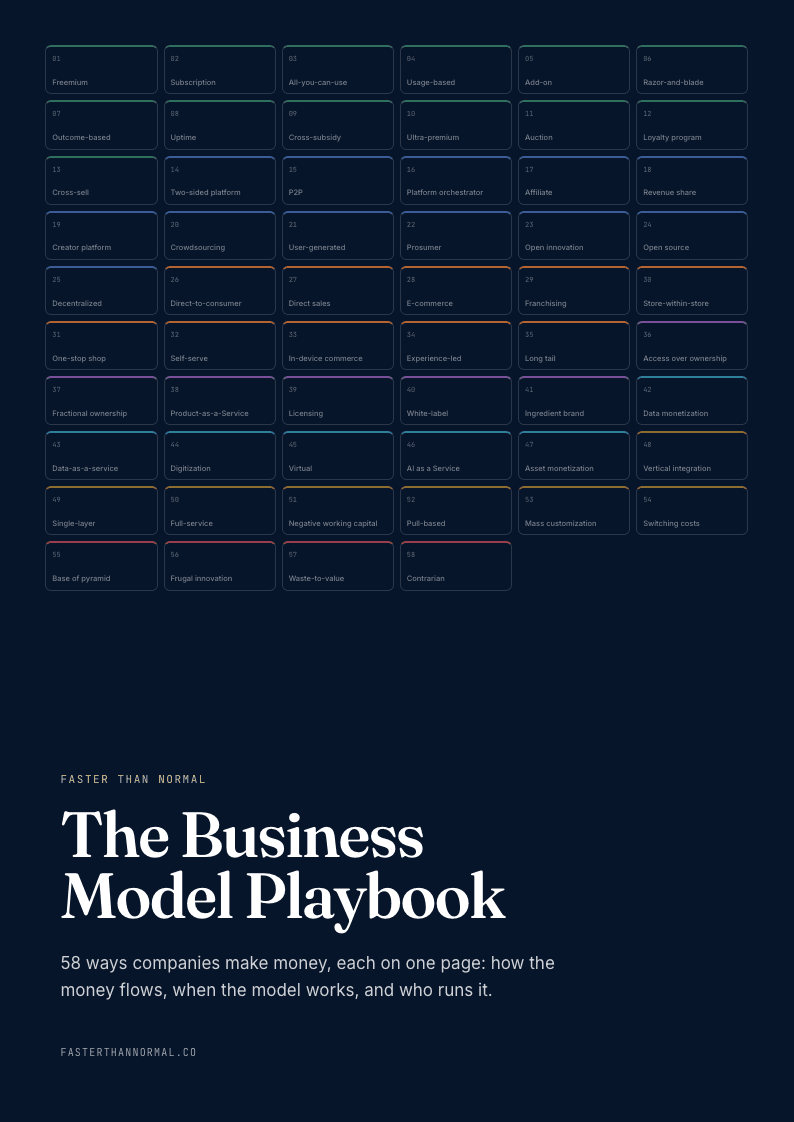
Get The Business Model Playbook
58 business models, one visual page each: how the money flows, the metrics that matter, and who runs it. Free when you join the Faster Than Normal email.
Free. No spam. Unsubscribe anytime.