

Madonna, The Map Of Productivity and Reclaiming Control Of Your Schedule
Madonna arrived in New York City in 1978 with $35 and an unshakeable conviction that she would matter. "I felt like a warrior plunging my way through the crowds to survive," she said. Four decades later, the math speaks: over 300 million records sold, countless cultural boundaries pushed, and a blueprint for reinvention that remains unmatched. Her breakthrough with the 1983 self-titled debut spawned "Holiday" and "Lucky Star," but the real product was Madonna herself — a brand that refused to stay still.
The lesson isn't about music. It's about clarity of intent married to relentless execution. "I'm tough, I'm ambitious, and I know exactly what I want. If that makes me a bitch, okay." That's the whole trick — knowing what you want and refusing to apologize for pursuing it.
The Art of Controlled Reinvention
Most people mistake Madonna's career for chaos. In reality, it's controlled reinvention — each pivot calculated to stay ahead of cultural shifts while deepening her core brand. From the Material Girl to the spiritual seeker to the fitness entrepreneur, she understood that staying relevant meant staying mobile.
Old Navy executed a similar strategy in retail. Mickey Drexler spotted surplus stores in Paris selling affordable, stylish clothing and recognized the gap between Gap's positioning and mass market opportunity. The first Old Navy store opened in Colma, California in 1994, reaching $1 billion in sales within four years. By 2000, over 500 stores. Today, 1,100+ stores generating $8 billion annually.
The insight wasn't revolutionary — provide style at accessible prices. The execution was. Old Navy made budget shopping fun, not just functional. Stores featured quirky decor like old gas pumps and jukeboxes. Shopping became an experience, not a transaction. They embraced fast-fashion before it had a name, prioritizing speed to market over design perfection.
The Productivity Paradox
The map of productivity reveals why most high performers burn out. They optimize for output without mapping energy flows. The visual framework shows four quadrants: high impact/high energy (your sweet spot), high impact/low energy (delegate or systematize), low impact/high energy (eliminate), and low impact/low energy (obvious cuts).
The trap is living in the high impact/low energy quadrant — doing important work that drains you. That's where systems thinking matters. If you can't delegate it, you need to systematize it or eliminate it entirely.
Neil Gaiman learned this lesson the hard way. Stephen King's advice during Sandman's peak success: "This is really great. You should enjoy it." Gaiman ignored it. Spent the next fifteen years writing in his head, worrying about deadlines, missing the experience for fear of what came next. "There were parts of the ride I missed, because I was too worried about things going wrong, about what came next, to enjoy the bit I was on."
Reclaiming Your Schedule
The fundamental issue isn't time management — it's energy management wrapped in priority clarity. Dan Martell's "Buy Back Your Time" framework cuts through the productivity theater that keeps executives busy but not effective.
The buyback principle: calculate your hourly rate, then audit every task below that threshold. If you're worth $500/hour but spending time on $50/hour work, you're hemorrhaging value. Not just financially — cognitively. Every low-value task consumes decision bandwidth that should be reserved for high-stakes choices.
Dan Sullivan's "Who Not How" complements this perfectly. The question isn't how to do something better — it's who can do it instead. When you shift from "How do I scale marketing?" to "Who can scale marketing?", the solution space expands exponentially.
The implementation sequence matters:
- Audit current tasks by dollar value
- Identify everything below your hourly rate
- Find the "who" for each task
- Create systems for handoffs
- Reinvest freed bandwidth into higher-leverage activities
Most executives get stuck at step three. Finding quality people takes time upfront but creates compounding returns. Remote talent platforms like Athyna demonstrate this — accessing Facebook, Uber, and Zoom-caliber professionals at 70% cost savings. The constraint isn't availability; it's your willingness to invest in the search and onboarding process.
The 1% Question
"What can I do today to improve by 1%?"
The question works because it's simultaneously ambitious and achievable. Large improvements feel overwhelming and often lead to procrastination. Tiny improvements compound. Over a year, 1% daily improvement yields 37x gains (1.01^365 = 37.8).
The key is specificity. "Improve 1%" is meaningless. "Write one additional paragraph in today's report" or "spend five minutes reviewing tomorrow's calendar" creates actionable momentum.
Madonna understood this intuitively. Each album wasn't a complete reinvention — it was a 1% evolution that felt revolutionary over time. The cumulative effect created cultural staying power that pure talent alone couldn't achieve.
Excellence isn't about perfection. It's about clarity of direction combined with consistent execution. Madonna knew what she wanted and refused to apologize for pursuing it. Old Navy spotted a market gap and executed with playful precision. Both understood that sustainable success requires systematic improvement, not sporadic brilliance.
The framework applies universally: map your energy flows, buy back your time through strategic delegation, and commit to daily 1% improvements. The compound effect handles the rest.
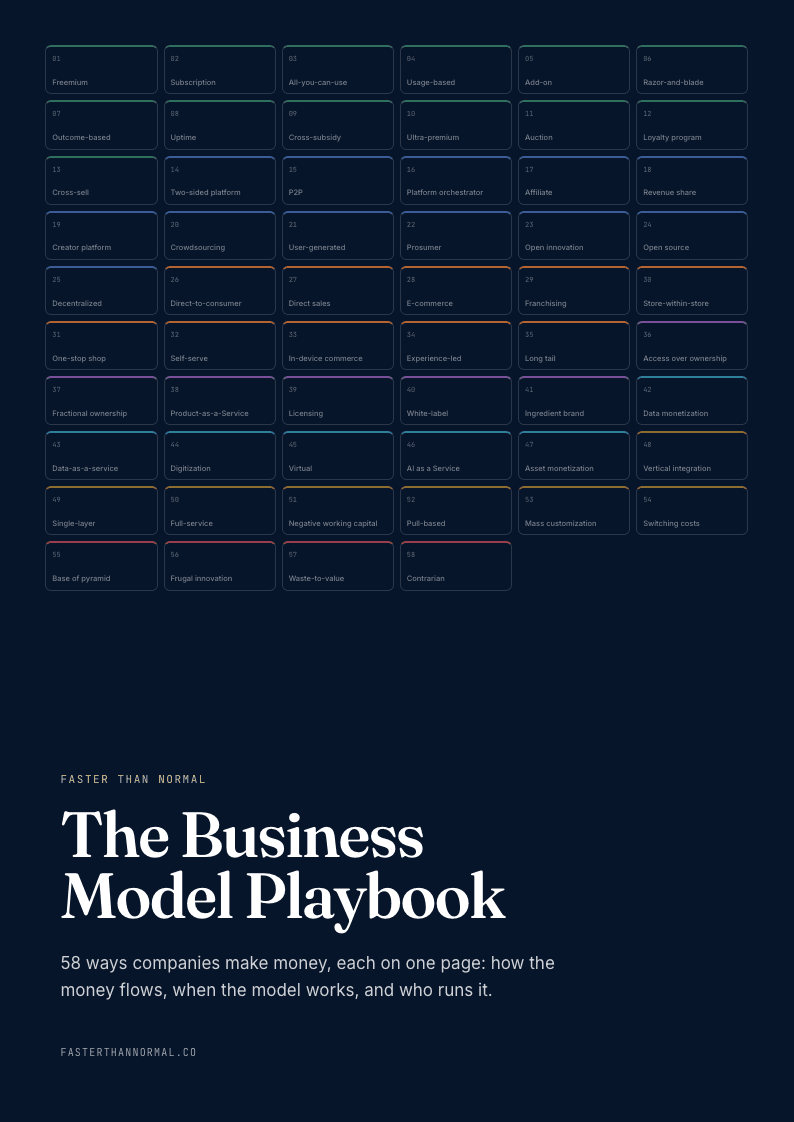
Free playbook
Get The Business Model Playbook
58 business models, one visual page each: how the money flows, the metrics that matter, and who runs it. Free when you join the Faster Than Normal email.
Free. No spam. Unsubscribe anytime.