

Harold Hamm, Systems vs. Goals and Personal Productivity and Efficiency
Harold Hamm built Continental Resources from a $1,000 truck loan into a company worth $60 billion. The trajectory wasn't accidental — it followed a particular approach to persistence and systems that offers insights beyond energy extraction.
The Sharecropper's Gambit
Born to Oklahoma sharecroppers in 1945, Hamm started Continental Resources at 21 with borrowed capital and a secondhand truck. His insight wasn't geological initially — it was operational. While competitors chased proven reserves, Hamm systematically acquired mineral rights in overlooked formations across North Dakota and Montana.
The Bakken formation had been known since the 1950s, but conventional drilling made it uneconomical. Hamm's breakthrough came through horizontal drilling combined with hydraulic fracturing — techniques that required patient capital deployment and operational precision most wildcatters couldn't sustain.
"I've been shot at, sued, audited, and investigated. But I never gave up."
This wasn't romantic perseverance. Continental's early years involved systematic risk management: acquiring rights cheaply, testing drilling techniques methodically, and building operational capacity before scaling. Hamm understood that energy plays required both geological conviction and financial discipline.
By 2014, when his net worth peaked at $18.7 billion, Continental had become the largest leaseholder in the Bakken. The company produced 200,000 barrels per day from formations that had been written off as marginal decades earlier.
Systematic Contrarianism
Hamm's approach reveals how systematic thinking compounds over time. While markets focused on quarterly results, he built infrastructure for decade-long plays. His conviction in American energy independence — "America has the resources to become energy independent" — wasn't ideology but operational reality based on proprietary data.
The lesson isn't about oil. It's about identifying structural opportunities that require patient, systematic execution while others chase immediate returns.
General Electric: The Architecture of Scale
General Electric represents both the potential and peril of systematic expansion. Founded in 1892 through the merger of Edison's company and Thomson-Houston Electric, GE became a case study in how systematic diversification can create — and destroy — value.
The Welch Era: Systems as Strategy
Jack Welch's tenure (1981-2001) demonstrated systematic thinking at organizational scale. His "fix, sell, or close" methodology wasn't arbitrary cost-cutting — it was systematic capital allocation. Any business unit that couldn't achieve first or second position in its market faced elimination.
This approach generated extraordinary returns. Under Welch, GE's market capitalization grew from $14 billion to $410 billion. The system worked because it created clear decision criteria and eliminated emotional attachment to underperforming assets.
Welch's succession planning process took eight years and evaluated hundreds of candidates across multiple scenarios. The system emphasized bench strength over individual genius — until it didn't.
The Immelt Transition: When Systems Break
Jeff Immelt's handover in 2001 appeared seamless, but subsequent leadership transitions revealed the fragility of GE's approach. The company's complexity had grown beyond any individual's capacity to manage effectively.
GE Capital's expansion into financial services created systemic risk that nearly destroyed the industrial business during 2008. What had been systematic diversification became dangerous correlation — when credit markets froze, every division suffered simultaneously.
The core insight: systems that work in one environment can become liabilities when conditions change. GE's size and complexity, once advantages, became sources of vulnerability.
Systems vs. Goals: The Architecture of Achievement
The distinction between systems and goals isn't semantic — it's operational. Goals define direction; systems determine progress.
Consider the writing example: "Write a book" is a goal. "Write 500 words every morning" is a system. The goal provides motivation, but the system generates results.
This principle scales across domains:
Business development: "Increase revenue by 50%" (goal) versus "Make 20 qualified prospect calls daily" (system).
Investment: "Achieve 15% annual returns" (goal) versus "Analyze 50 companies quarterly and invest in undervalued positions with 5+ year holding periods" (system).
Physical fitness: "Lose 30 pounds" (goal) versus "Complete 45-minute workouts six days weekly" (system).
Why Systems Outperform Goals
Systems create automaticity. They remove decision fatigue from daily execution. When you commit to writing 500 words daily, you eliminate the daily negotiation about whether to write. The system decides.
Systems also handle failure better than goals. Missing one day of writing doesn't derail the system — you resume the next day. Falling short of a book deadline can feel catastrophic.
James Clear's observation captures this: "Goals determine your direction. Systems determine your progress."
The tactical application: identify your most important outcomes, then design systems that make progress inevitable rather than dependent on motivation or circumstances.
Strategic Flexibility: Bezos on Stubborn Persistence
Jeff Bezos articulated a crucial balance for systematic thinkers: "If you're not stubborn, you'll give up on experiments too soon. And if you're not flexible, you'll pound your head against the wall and you won't see a different solution to a problem you're trying to solve."
This isn't contradiction — it's operational sophistication. Be stubborn about the system, flexible about tactics.
Amazon demonstrated this principle repeatedly. Bezos remained stubborn about customer obsession and long-term thinking (the system) while adapting everything from fulfillment methods to product categories (the tactics).
The same principle applied at Continental Resources. Hamm stayed stubborn about his conviction in unconventional oil plays while adapting drilling techniques, financing methods, and operational approaches as technology and markets evolved.
Tactical Applications for Personal Productivity
Weekly Reviews: Implement a consistent weekly review practice. Schedule 60 minutes every Friday to assess progress, adjust priorities, and plan the following week. This system ensures course corrections happen regularly rather than reactively.
One-Touch Principle: Handle information once when possible. When you read an email, decide immediately: respond, delegate, defer with specific timeline, or delete. This system reduces cognitive overhead and prevents task accumulation.
Daily Systems Audit: Ask yourself: "What did I do today that moved my most important projects forward?" If the answer is nothing, your systems need adjustment, not more motivation.
The Fear Question
If you had no fear, what steps would you take differently now?
This question reveals where your systems might be optimizing for comfort rather than progress. Fear often disguises itself as prudence, but genuine risk assessment differs from fear-based decision-making.
Harold Hamm faced constant criticism for his energy independence predictions when conventional wisdom favored oil imports. His systematic approach to land acquisition and drilling techniques proved more reliable than expert consensus.
The question isn't whether to eliminate fear — it's whether your systems account for it productively. Design systems that work despite fear rather than systems that require its absence.
Your daily systems should be robust enough to function when motivation fails, energy lags, or uncertainty increases. That's when systematic thinking pays its highest dividends.
Free playbook
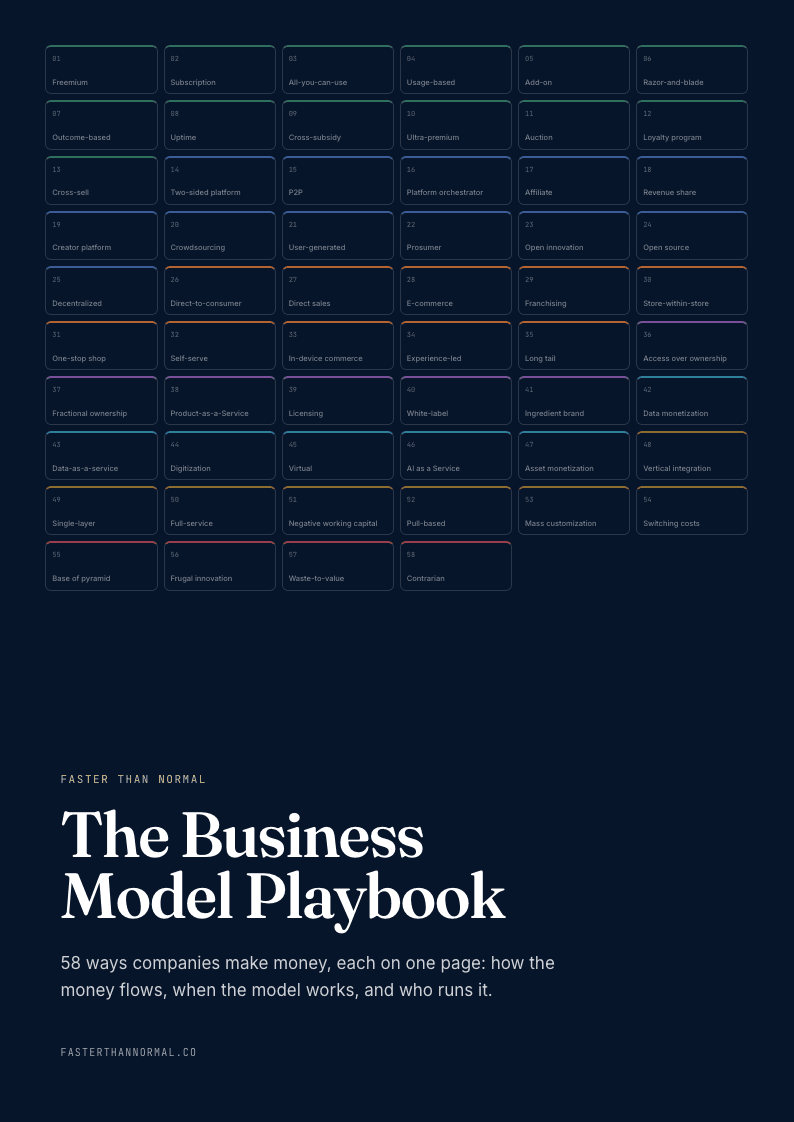
Get The Business Model Playbook
58 business models, one visual page each: how the money flows, the metrics that matter, and who runs it. Free when you join the Faster Than Normal email.
Free. No spam. Unsubscribe anytime.